By Douglas Princemola
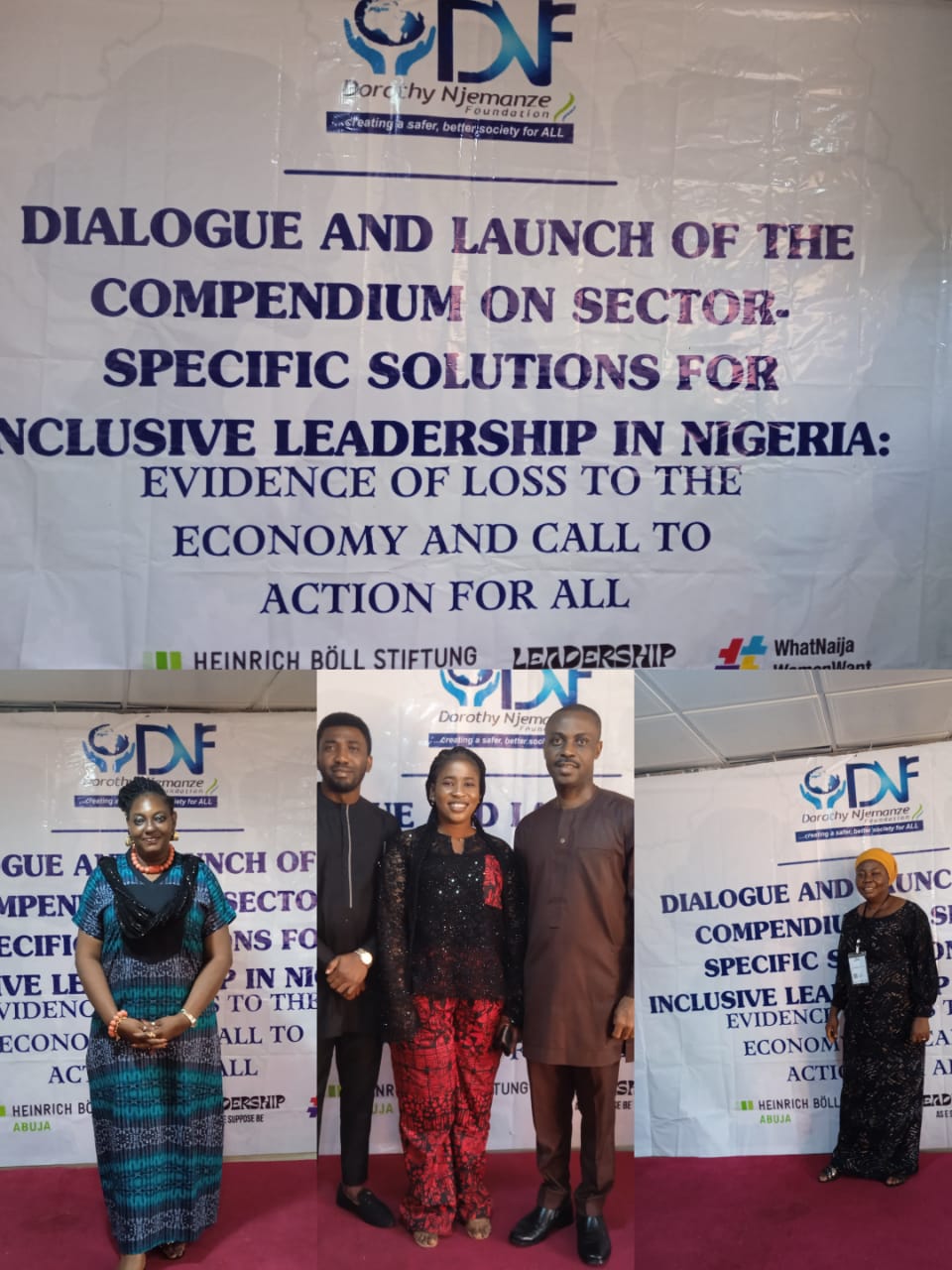
The Dorothy Njemanze Foundation, a survivor-led, not-for-profit organization focused on promoting gender equity and access to justice for women and girls in Nigeria, has introduced a compendium of sector-specific solutions for inclusive leadership. The event, held in Owerri, Imo State, brought together traditional rulers, civil society groups, security agencies, government representatives, and members of the media.
With the theme “Creating a Safer, Better Society for All – Dialogue and Launch of the Compendium of Sector-Specific Solutions for Inclusive Leadership in Nigeria: Loss and Call to Action for All,” the event served as a dialogue forum and a platform to present a strategic document aimed at addressing long-standing gender representation gaps across various sectors.
The compendium provides practical recommendations tailored to areas such as governance, education, law enforcement, traditional institutions, and civil society. It includes steps for policymakers, community leaders, and institutions to promote equal participation, protect human rights, and reduce barriers that limit women and girls from taking up leadership roles.
Dorothy Njemanze, founder of the foundation and an advocate for gender justice, spoke about the limited inclusion of women and marginalized groups in leadership positions in Nigeria. She noted that genuine inclusion requires changes to structures and systems, not just increased representation.
She stated that the foundation remains committed to supporting gender inclusion in both political and public service spaces, and encouraged institutions to apply the compendium as a tool for meaningful change. According to her, the continued underrepresentation of women in decision-making roles affects the diversity of views needed for governance and development.
She added that the compendium serves as a practical resource as well as a prompt for action. It is intended to support policymakers, security agencies, traditional authorities, and civil society groups in developing strategies that uphold human rights and reflect democratic values. In her view, inclusive leadership is an important part of building a fair and balanced society.
Security concerns in communities across Imo State were also raised during the event. Representing the Commissioner of Police, CP Aboki Danjuma, the Imo State Police Public Relations Officer, DSP Henry Okoye, addressed attendees and spoke on the commitment of the police to maintaining peace and safety throughout the state. He mentioned that efforts are ongoing to ensure all communities in Imo receive the security they need, pointing out that safety is essential to encouraging inclusive governance.
Okoye also discussed the importance of cooperation between law enforcement and community-based organizations in responding to gender-based violence and insecurity. He explained that insecurity can prevent women and girls from fully participating in public life and leadership, reinforcing existing inequalities.
Traditional rulers and civil society representatives who spoke at the event acknowledged the need for reforms and wider inclusion in governance. Several contributors highlighted the importance of community involvement, cultural understanding, and accountability in the implementation of gender policies. While progress has been made in some areas, they noted that additional steps are necessary to support the full participation of women in leadership.
The dialogue concluded with a general call for institutions across all sectors—government, security, traditional leadership, private organizations, and civil society—to take responsibility for promoting gender equality. Participants urged public authorities to adopt the compendium’s recommendations and include them in policy and planning processes at both the national and state levels.
As Nigeria continues to address challenges such as inequality, insecurity, and limited representation, the work of organizations like the Dorothy Njemanze Foundation remains important. Through advocacy, research, and engagement, the foundation continues to support the development of a society where leadership roles are accessible to all, regardless of gender.
The event in Owerri marked both the launch of a policy resource and a step toward improving inclusive leadership and governance practices in Nigeria.
