By Our Correspondent
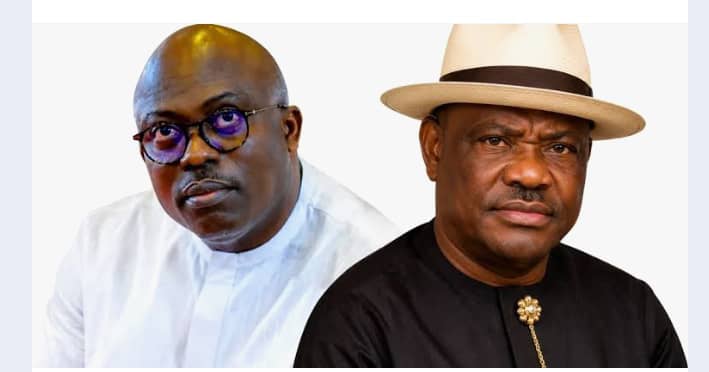
Minister of the Federal Capital Territory (FCT), Nyesom Wike, has revealed why suspended Rivers State Governor Siminalayi Fubara was not allowed to seek a second term in office, describing the decision as a political strategy aimed at protecting the structure that brought the governor to power.
Speaking during his monthly media chat, Wike said the decision was reached after members of his political camp concluded that supporting Fubara’s re-election would undermine their influence and weaken the political structure they had spent years building in Rivers State.
According to the former Rivers State governor, the prolonged political crisis between himself and Fubara stemmed from the governor’s alleged departure from agreements and understandings reached after he assumed office. Wike maintained that political loyalty and respect for established structures remain essential in governance, adding that the conflict could have been avoided if previous commitments had been honoured.
Wike alleged that Fubara aligned himself with individuals and groups whose objective was to dismantle the political structure that facilitated his emergence as governor. He argued that allowing the governor to secure another term under those circumstances would have rendered his supporters politically irrelevant.
The FCT minister further stated that discussions within his political camp led to a consensus that Fubara should not be backed for a second term. He described the move as a strategic political decision rather than a personal dispute, insisting it was necessary to preserve the influence and unity of his political family.
Wike also revisited earlier peace efforts aimed at resolving the Rivers political crisis. He claimed that an understanding had been reached under which impeachment moves against Fubara would be abandoned, while the governor, in return, would not seek re-election. According to Wike, the agreement later became contentious after Fubara reportedly obtained nomination forms before eventually withdrawing from the governorship race.
The political standoff between the two leaders has remained one of Nigeria’s most closely watched political developments, reshaping alliances and generating widespread debate over the future of governance and political succession in Rivers State.
While Wike’s remarks provide his perspective on the events leading to the decision, other political stakeholders have offered differing interpretations of the crisis and the circumstances surrounding Fubara’s political future.
The latest comments are expected to reignite discussions across the country’s political landscape as observers continue to monitor developments in Rivers State ahead of future political realignments.
