By Our Correspondent
The race towards the 2027 general elections has gathered fresh momentum in Rivers State following the unveiling of 49 adopted candidates by the Nyesom Wike-led Rainbow Coalition and its declaration of support for President Bola Ahmed Tinubu’s second-term ambition.
The development has added a new dimension to political calculations in the state, with the coalition bringing together politicians from different parties under a common platform ahead of the next electoral cycle.
The announcement, made in Port Harcourt on Tuesday, October 27, 2026, is expected to attract attention from political stakeholders, party supporters and observers monitoring the evolving political situation in Rivers State.
At the centre of the gathering was the coalition’s plan to coordinate support for its adopted candidates across various elective positions while mobilising political backing for Tinubu’s re-election bid.
The unveiling represents a major political move by Wike and other members of the Rainbow Coalition as preparations for the 2027 general elections continue to take shape.
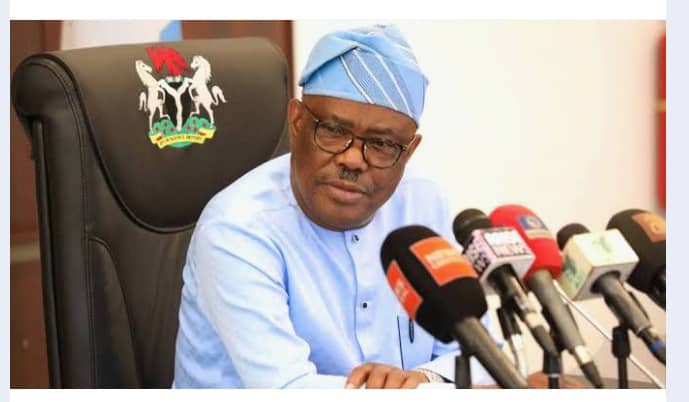
Wike, a former Rivers State governor and current Minister of the Federal Capital Territory, has remained an influential figure in the state’s political affairs. Through the Rainbow Coalition, political actors from different affiliations are seeking to establish a common front and coordinate their activities ahead of the elections.
The adoption of candidates for several elective offices suggests that the coalition intends to participate actively in the political contest at both state and national levels. The coming months will reveal how effectively the group can sustain its structure, mobilise supporters and translate its political declarations into an organised electoral campaign.
A breakdown of the 49 adopted candidates indicates that the All Progressives Congress (APC) accounts for 34 candidates, while the Peoples Democratic Party (PDP) has 15.
The distribution highlights the coalition’s cross-party arrangement, with members of both major political parties featuring on its list of preferred candidates. The candidates are spread across the governorship, Senate, House of Representatives and Rivers State House of Assembly positions.
The arrangement is particularly noteworthy because it brings together politicians who belong to different parties but are now associated with a common political initiative. However, the coalition’s adoption of the candidates remains distinct from the formal nomination processes required by the respective parties under Nigeria’s electoral framework.
One of the major highlights of the event was the coalition’s declaration of support for President Tinubu’s bid for a second term in office.
Wike reportedly urged politicians, including members of the PDP, to support the President ahead of the 2027 presidential election. The declaration reinforces the coalition’s stated intention to extend its political activities beyond Rivers State and contribute to the national electoral contest.
It also illustrates how political alliances can cut across party affiliations as leaders and stakeholders explore common interests ahead of a general election. Tinubu’s re-election bid is expected to remain a major subject of political debate as parties, coalitions and aspirants begin to define their strategies for 2027.
The Rainbow Coalition’s position places it among the political groups publicly expressing support for the President’s second-term ambition.
Rivers State Governor Siminalayi Fubara’s expressed support for the coalition also emerged as a major talking point at the gathering.
The development comes against the background of the prolonged political disagreement between Fubara and Wike, which has significantly influenced the state’s political environment.
Their political relationship has been closely watched by residents and stakeholders because of its implications for governance, party alignments and the balance of political influence in Rivers State.
Fubara’s public position at the event suggests an effort to work with the coalition as preparations for the next general elections gather pace. Nevertheless, the durability of the political understanding will depend on the extent to which the key actors maintain cooperation and manage their respective interests in the months ahead.
The Rainbow Coalition reportedly includes political figures associated with parties beyond the APC and PDP, including the Labour Party, Action Alliance, All Progressives Grand Alliance, Allied Peoples Movement and Boot Party.
The involvement of politicians from different platforms reflects an effort to build a broader political alliance around shared electoral objectives. Rather than operating exclusively within one party, the coalition is seeking to coordinate political support across multiple affiliations.
Such arrangements can create opportunities for cooperation, although they may also require careful negotiations over candidate selection, party interests and campaign priorities. For the coalition, maintaining unity among its diverse members will be an important test as the election season approaches.
Rivers State occupies an important position in Nigeria’s political calculations, particularly because of its influence in the South-South geopolitical zone. As the 2027 elections approach, the activities of prominent political figures and emerging alliances are likely to attract increased attention.
The Rainbow Coalition’s announcement has introduced another development into the contest over political influence in the state. Its adopted candidates will need to build public support, engage voters and demonstrate their capacity to represent their respective constituencies.
At the same time, other political parties and aspirants are expected to pursue their own strategies, making the coming months an important period for political consultations and organisation.
The coalition’s unveiling of 49 candidates and its endorsement of Tinubu’s second-term ambition demonstrate its intention to play a role in shaping the next electoral cycle. The move also highlights the relationship between local political alliances and national electoral objectives.
However, the announcement alone does not determine the eventual outcome of the elections. The formal nomination process, the activities of rival political groups, voter engagement and compliance with electoral regulations will all remain important factors.
For the adopted candidates, the immediate task is to consolidate their political structures and prepare for the next stages of the electoral process. For the coalition’s leadership, sustaining cooperation among its members and translating the alliance into effective political organisation will be central to its ambitions.
With the 2027 general elections drawing closer, further political meetings, endorsements and realignments are expected across Rivers State and other parts of the country. The Rainbow Coalition’s latest announcement may encourage additional consultations among politicians seeking common ground ahead of the elections.
Whether the coalition can maintain its unity and establish a lasting political structure will become clearer as the electoral process advances.
For now, the unveiling of the 49 adopted candidates, coupled with the endorsement of Tinubu’s second-term bid, has placed the coalition in the spotlight of Rivers State politics.
As political activities intensify, attention will focus on how the coalition’s adopted candidates position themselves, how its leaders sustain their alliance, and how the unfolding developments shape the contest for political offices in 2027.
