By Our Correspondent
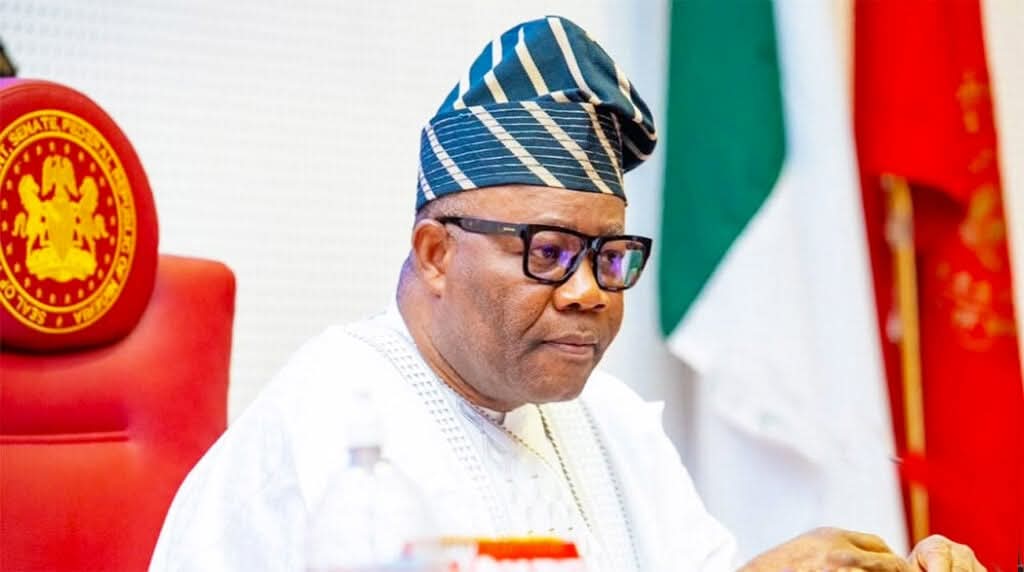
Senate President Godswill Akpabio has given political and legislative backing to the long‑standing proposal to create a new Anioma State from parts of Delta State, declaring that Asaba would serve as its capital if the plan becomes reality. His remarks signal support for the initiative within the National Assembly and from the ruling All Progressives Congress (APC).
Speaking on Wednesday at the South‑South zonal congress of the APC held in Asaba, Delta State, Akpabio said the administration of President Bola Tinubu remains committed to the idea as part of broader efforts to promote equity, balanced development, and administrative efficiency across Nigeria’s federating units.
The proposed Anioma State, which would comprise the Anioma people, a culturally and linguistically distinct group in the northern part of Delta State, has been a subject of agitation for decades. The idea is rooted in calls for improved political representation, fair resource allocation, and enhanced local development.
Under Akpabio’s proposal, Asaba, currently the capital of Delta State and a key administrative and cultural centre for the Anioma people, would become the capital of the new Anioma State. Asaba’s strategic location along the River Niger and its historical significance make it a natural choice for the new seat of government.
Addressing concerns about the remaining portion of Delta State after the proposed split, Akpabio said Warri would be designated the new capital. He noted that Warri, a major economic hub in the South‑South with significant infrastructure, including an airport, seaport, government offices, and corporate facilities, is well placed to serve as the administrative centre of a re‑constituted Delta State.
Akpabio described the Anioma state agitation as historically justified, noting that the bill championed by Senator Ned Nwoko, representing Delta North, has received attention in the Senate and ranks among the priorities of the current 10th National Assembly.
He also outlined the potential socio‑economic and administrative benefits of creating the new state, including decentralised governance, job creation, and more effective public service delivery for communities across both the proposed Anioma and the re‑structured Delta State.
While Akpabio’s endorsement boosts the movement, the formal creation of any new Nigerian state still requires constitutional procedures, including approval of relevant bills by the National Assembly, review by affected state assemblies, and potential referenda.
The APC zonal congress was attended by governors and senior party officials from the South‑South region, reflecting the broad political interest in the issue.
