By our reporter
A senior UK government minister has rejected a proposal from former U.S. President Donald Trump, who recently suggested that the United Kingdom should use its military to stop illegal migration across the English Channel.
Trade Secretary Peter Kyle dismissed the idea, stating that immigration enforcement should remain the responsibility of civilian agencies and not the armed forces. According to Kyle, the UK Border Force has been strengthened and granted expanded powers, making military involvement unnecessary.
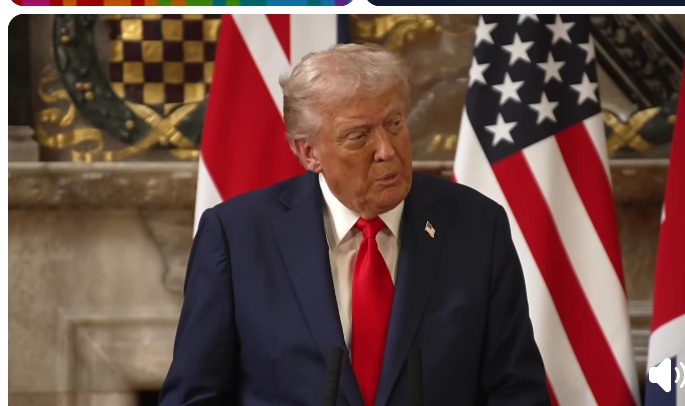
Trump, during a private visit to the UK, reportedly urged Prime Minister Keir Starmer to take tougher action on illegal immigration, including considering the deployment of military forces. He later told reporters that strong action was essential to prevent national decline, pointing to his own immigration policies during his time in office as a model.
The proposal drew criticism in the UK, with many politicians and legal experts expressing concern over the implications of using military force for border enforcement. Critics argue that such a move would be disproportionate, legally questionable, and contrary to British norms.
The UK government has recently taken steps to reduce illegal Channel crossings through policy reforms and international agreements. Under a new bilateral arrangement with France, the UK will return individuals who arrive illegally by small boats while accepting a fixed number of legal asylum seekers from France. The policy is aimed at discouraging dangerous crossings and disrupting smuggling networks.
Peter Kyle noted that while the Royal Navy does coordinate with the Border Force when needed, there are no plans to make military deployment a primary tool in managing migration. He reaffirmed the government’s commitment to tackling the issue through lawful, measured, and effective means.
Legal commentators have warned that deploying the military on UK soil for migration enforcement could pose risks to civil liberties and human rights. The idea has sparked debate, but the government has made clear that it does not intend to follow the approach suggested by the former U.S. president.
As discussions around migration continue, the UK government appears determined to pursue its own strategies, rooted in existing legal frameworks and international cooperation, rather than adopting foreign policy models.
