By Douglas Princemola
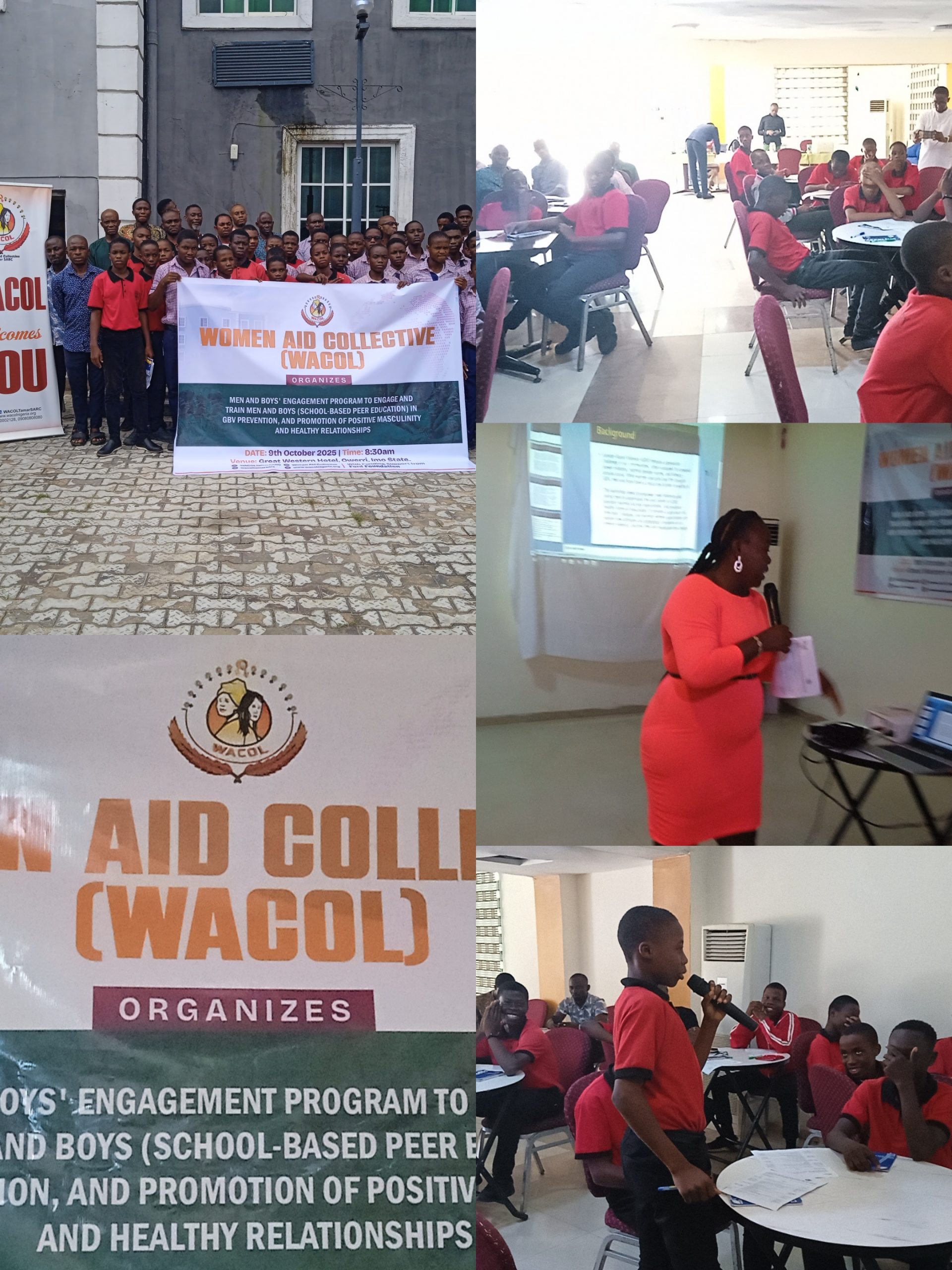
As part of its ongoing mission to promote gender equity and combat gender-based violence GBV, the Women Aid Collective WACOL, in partnership with the Ford Foundation, convened a transformative engagement program for men and boys on Thursday, October 9, 2025, at the Great Western Hotel, World Bank area, Owerri, Imo State.
The program, titled Organizing School-Based Peer Education GBV Prevention Programs and Campaigns to Promote Positive Masculinity and Healthy Relationships, brought together young men, educators, religious leaders, youth advocates, students, and emerging community influencers for a full day of learning, dialogue, and reflection.

This initiative aimed to equip men and boys with the knowledge, skills, and values necessary to promote gender-equitable attitudes, prevent GBV, and build respectful, healthy relationships. It focused on community-based education, youth leadership, and peer-to-peer advocacy as tools for long-term behavioral change.
Participants began arriving early and were warmly welcomed by the WACOL team. Mr Emmanuel Ubajekwe coordinated the registration process, setting an organized tone for the day. This was followed by an interactive self-introduction session led by Ms Stella Igwe, which fostered a sense of openness and camaraderie.
Ms Igwe then presented the program overview, emphasizing the importance of honesty, mutual respect, and active listening throughout the sessions. She outlined the purpose, expected outcomes, and ground rules for participation.

The keynote address, delivered on behalf of Professor Joy Ngozi Ezeilo (SAN, OON, Life Bencher), Founding Director of WACOL and former United Nations Special Rapporteur on Human Trafficking, was read by Mr Emmanuel Ubajekwe. Professor Ezeilo thanked the Ford Foundation for its ongoing support in advancing gender justice and education.
To end gender-based violence, we must address the cultural and social beliefs that reinforce male dominance and normalize abuse, she emphasized. This requires deliberate engagement with men and boys, particularly at the grassroots level.
She highlighted the necessity of involving men and boys in dismantling harmful gender norms, stressing that true societal transformation is only possible when both genders work together toward justice and inclusion.

A pre-test questionnaire was administered to assess participants understanding of concepts such as masculinity, consent, harassment, and respectful communication.
The first technical session, led by Pastor Victor Echebiri, explored Men, Boys, and Societal Gender Norms – Myths and Facts. He examined how cultural traditions, religious interpretations, and media influence masculine behavior, often leading to inequality and violence.

Pastor Echebiri encouraged critical thinking around these influences, advocating for healthier models of masculinity based on empathy, support, and responsibility. His presentation included discussions on objectification and victim-blaming, normalization of harassment, and consent, coercion, and communication in relationships. Using relatable examples, he guided participants to rethink widely accepted behaviors and societal norms that perpetuate abuse.
After a brief refreshment break, the afternoon session resumed with a presentation by Mr Timothy Erengwa, who discussed respectful behavior, interrupting harmful cycles, allyship and accountability, and practical steps for creating change in communities.
Mr Erengwa stressed that true masculinity involves integrity, standing against injustice, supporting survivors, and modeling positive behavior for peers and the next generation.

A major highlight of the program was the Talk Shop and Experience Sharing session, which offered participants a safe space to discuss personal experiences and challenges in promoting gender equality. Many shared stories from their homes, schools, and communities, expressing the urgent need for continued education and mentorship for boys, beginning at an early age. The session was emotional, honest, and inspiring.
Following the final sessions, a post-test questionnaire revealed a marked improvement in participants understanding of key concepts discussed during the training.
In her closing remarks, Ms Stella Igwe thanked all facilitators, participants, and the WACOL team for their dedication and contributions. She urged everyone to become ambassadors for positive masculinity.
We must take what we have learned today and pass it on. Whether in the classroom, in our homes, or on the streets, each of us has a role to play in promoting respect, empathy, and equality, she said.

Schools represented at the event included Victory International Secondary School and Disciples of Jesus Christ Secondary School, both located in Okpuala Naze, Owerri North LGA. Also in attendance were young entrepreneurs, clergy, youth leaders, and individuals involved in local governance and advocacy.
The day concluded with group photographs, light refreshments, and informal networking. Many participants described the event as eye-opening, timely, and necessary in addressing todays social challenges.

Through programs like this, WACOL continues to lead conversations and actions aimed at reducing GBV and fostering respectful relationships. With consistent youth engagement and community-based education, the organization remains committed to building a safer, more inclusive society starting with those who have often been left out of the conversation, men and boys.
