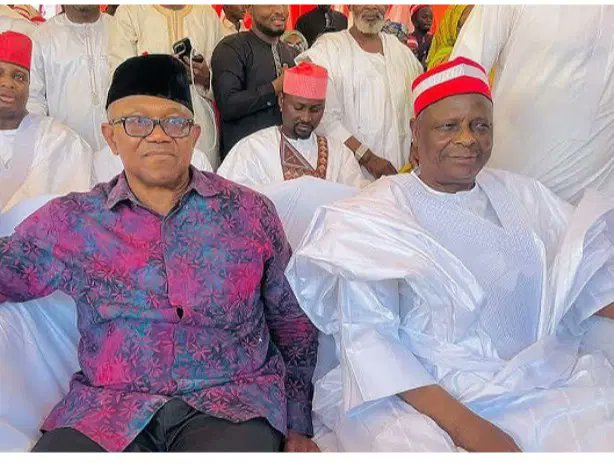
By Our Correspondent
As Nigeria gradually shifts its focus toward the 2027 general elections, growing speculation about a possible alliance between Peter Obi and Rabiu Kwankwaso is capturing national attention. Many Nigerians see the potential partnership as a strategic move that could reshape the country’s political landscape, especially as the ruling All Progressives Congress (APC) continues to strengthen its hold on power.
Both Obi and Kwankwaso emerged as influential figures during the 2023 elections, each commanding strong and loyal support bases across different regions. Obi’s appeal resonates widely among young voters and urban populations, while Kwankwaso maintains a solid political structure in the North, particularly in Kano State. A united front between the two could help bridge regional divides and consolidate opposition votes, offering a serious challenge to the APC.
The idea of such an alliance has inspired optimism among supporters who believe that opposition unity is the most viable path to unseating the ruling party. For many, an Obi–Kwankwaso ticket represents political cooperation and a vision of national inclusion and balanced representation.
However, despite the enthusiasm, challenges remain. The most pressing issue is leadership both men are seasoned politicians with presidential ambitions, making it difficult to determine who would take the top position. Differences in political structures, party affiliations, and strategic interests could also complicate negotiations.
As the political climate evolves, discussions around coalition-building are expected to intensify. While no formal agreement has been reached, the possibility of an Obi–Kwankwaso alliance highlights a growing recognition within opposition circles: unity may be essential to counter the advantages of incumbency and mount a serious challenge in 2027.
