By Our reporter
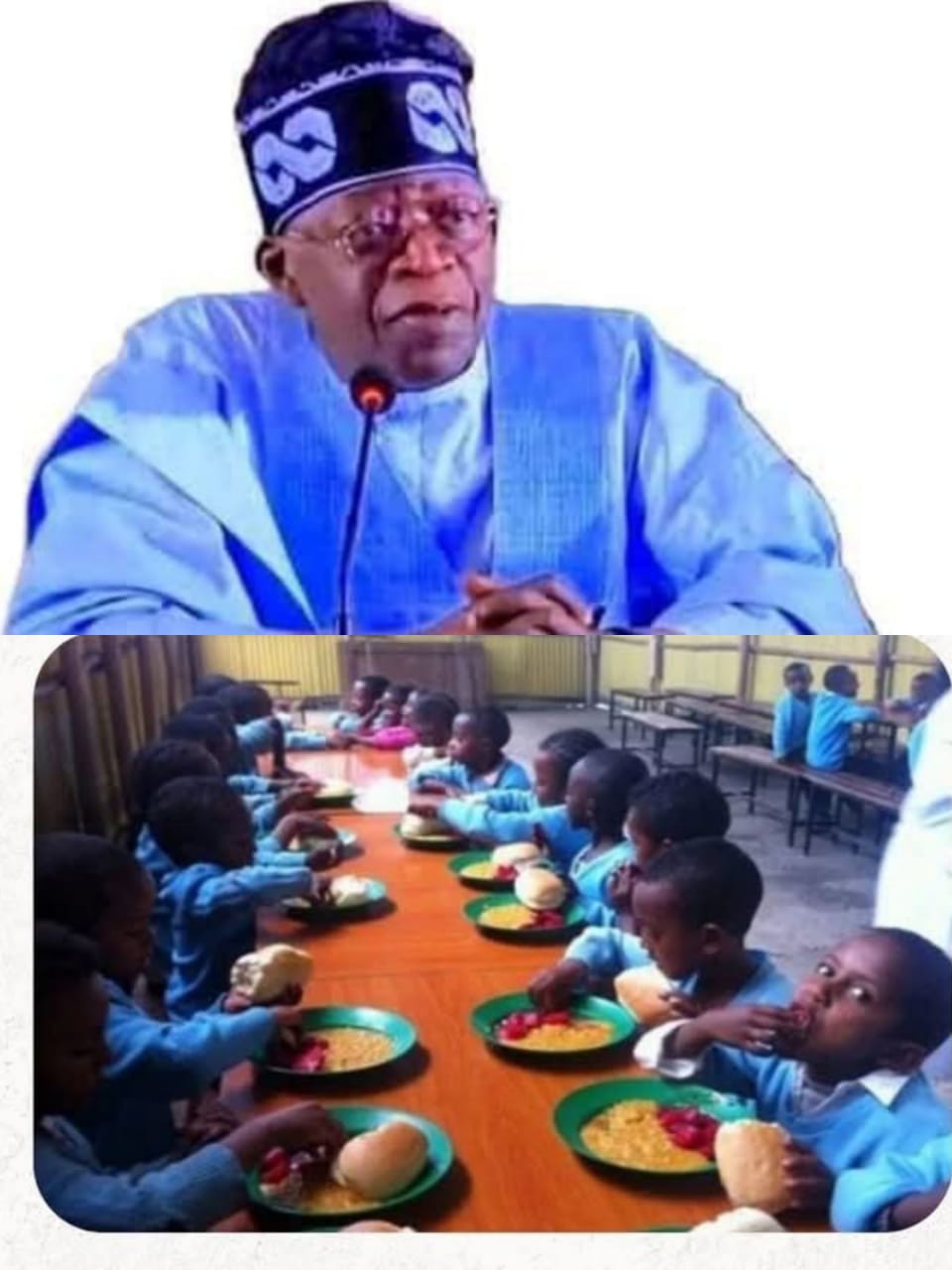
The Federal Government of Nigeria has announced a major expansion of the National Home-Grown School Feeding Programme, with plans to provide daily meals to up to 50 million primary school pupils by 2026. The programme, which could cost between ₦500 to ₦1,000 per child each day, aims to combat hunger, boost school enrollment, and support local food producers.
The initiative was unveiled by the National Social Investment Programme Agency (NSIPA), the body now responsible for coordinating government social interventions. It represents a key component of President Bola Tinubu’s Renewed Hope Agenda, which focuses on poverty reduction, economic inclusion, and educational access.
The plan extends the feeding programme from pupils in Primary 1 to 3, to now include all pupils from Primary 1 to 6 across public schools nationwide. NSIPA officials say the programme will be implemented in partnership with local farmers, suppliers, and community groups to reduce costs and enhance accountability.
According to NSIPA’s National Coordinator, Halima Shehu, efforts are underway to ensure that the meals are locally sourced, nutritionally balanced, and delivered through a transparent supply chain.
Shehu stated that the programme is not only designed to address child nutrition but also to create jobs in agriculture, transportation, and food processing. “This is not just a welfare programme. It’s a major economic lever that can boost local production and livelihoods,” she said.
However, the ambitious plan has been met with skepticism due to the troubled history of Nigeria’s school feeding programme. In previous administrations, similar initiatives were plagued by widespread corruption, mismanagement, and inefficiencies.
In 2020, the Independent Corrupt Practices and Other Related Offences Commission (ICPC) revealed that ₦2.67 billion meant for school feeding during the COVID-19 lockdown was found in private accounts. Investigations also exposed the existence of ghost schools and fictitious beneficiaries used to fraudulently obtain funds in several states.
Audits and media reports highlighted recurring issues such as vendors being paid without delivering food, irregular supply of meals, and poor-quality rations. In many schools, children received meals only a few times per week, while others were excluded entirely.
These challenges led to the suspension of the programme in early 2024, as part of a broader review of national social investment schemes. At the time, President Tinubu ordered a complete overhaul of the system to improve transparency and delivery.
Now relaunched under a restructured agency, the school feeding programme is set to resume gradually. A pilot phase launched in May 2025 targeted 10 million children and is being used to test new delivery models ahead of the national scale-up.
Despite these assurances, experts warn that the government must prioritize monitoring and financial oversight to avoid repeating past mistakes. Policy analysts have raised concerns about the feasibility of sustaining the programme financially, given the country’s economic challenges and rising inflation.
Feeding 50 million children at ₦1,000 per day would require ₦50 billion daily, or over ₦1 trillion monthly. Even at ₦500 per meal, the cost remains significant at ₦25 billion daily. These figures have raised questions about how the government intends to fund the programme long-term without sacrificing quality or falling into debt.
In response, NSIPA has said that improved procurement processes, digital beneficiary tracking, and performance-based vendor contracts will help maintain accountability. Community monitoring groups are also expected to play a role in oversight.
The 2025 federal budget has already allocated ₦100 billion for the current phase of the programme, with further funding expected in subsequent budgets. Government officials argue that the long-term benefits — improved child health, increased school attendance, and job creation — justify the investment.
While the plan has drawn cautious praise from development experts, many Nigerians remain wary. Critics argue that unless meaningful reforms are implemented, the programme could once again become a vehicle for corruption and waste.
With just over a year left to meet the 2026 target, the government now faces a critical test: whether it can turn a lofty promise into a functioning system that delivers real value to millions of children or repeat the cycle of failed social interventions.
