By Douglas Princemola
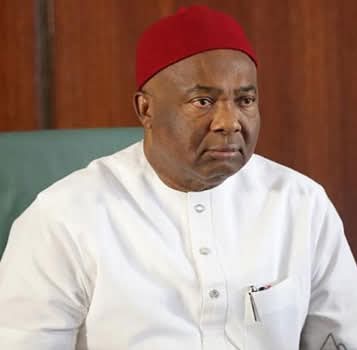
As the 2027 governorship election draws closer, political activities are gradually taking a new shape in Imo State, with attention shifting from who will occupy the Government House next to whether Governor Hope Uzodimma can achieve what his predecessors could not: successfully produce a successor.
Uzodimma is not seeking another term as governor. His second term will run its course, while he is expected to focus on his political future beyond the Government House. This has added a new dimension to the political calculations ahead of 2027.
For the governor, therefore, the 2027 election is not principally about retaining the Government House for himself. It is about political succession, legacy and the ability to transfer power to a candidate capable of winning the confidence of Imo voters.
And this is where the much-discussed 27-year succession jinx comes in.
Since the beginning of the Fourth Republic in 1999, Imo politics has witnessed dramatic shifts in power. Governors have emerged with formidable political structures, powerful allies and ambitious succession plans, but the transition from one administration to another has repeatedly produced unexpected outcomes.
The result is a political pattern that has become a subject of intense debate: no governor of the Fourth Republic has successfully completed his tenure and handed over to a successor of his political choice.
That history now places Uzodimma before a unique political challenge.
Can he be the governor who finally changes the pattern?
The governor has spent years building a political structure around his administration and the ruling All Progressives Congress. His supporters point to his influence within the party, his relationships across political circles and his record in government as factors that could give his camp considerable leverage going into 2027.
But political influence is one thing. Turning that influence into an electoral victory for a successor is another.
The 2027 contest will therefore test whether the structures built during Uzodimma’s administration can survive beyond him and whether they are strong enough to deliver a new governor.
Perhaps the most intriguing part of the 2027 equation is the identity of the person who will eventually emerge as the ruling party’s candidate.
For months, speculation has surrounded the question of whom Uzodimma may support. Some political observers believe the governor will ultimately back a candidate from his political camp, while reports have also suggested that uncertainty remains within the APC over the succession plan.
That uncertainty has made the political space even more interesting.
A governor who successfully manages succession must satisfy several competing interests, including party leaders, political blocs, aspirants, local structures and, ultimately, the electorate.
Choosing a successor is only the beginning. The real challenge will be selling that candidate to the people of Imo.
The candidate must possess a personality and political strength capable of standing beyond the shadow of the incumbent governor. He or she must also be able to appeal to voters who may judge the election based not on party loyalty but on issues affecting their daily lives.
Security, infrastructure, employment, education, healthcare, business opportunities and the cost of living are likely to feature prominently in the 2027 campaign.
The ruling APC enters the succession debate with the advantage of incumbency. The party has the machinery of government, an established political structure and a governor who remains influential within the party.
Uzodimma also occupies a prominent position within the national political structure, making his influence potentially significant in the political calculations ahead of 2027.
But the strength of the APC will ultimately depend on its ability to manage internal competition.
Governorship contests can create deep divisions, particularly when several ambitious politicians believe they have a legitimate claim to the ticket. If the nomination process produces bitterness, the party could face the danger of internal rebellion.
Another issue that could shape the 2027 race is zoning.
Political stakeholders from different parts of the state are already positioning themselves and making arguments about where power should move after Uzodimma.
Leaders and political groups from different zones are expected to intensify their mobilisation as the election approaches, making zoning one of the issues likely to dominate political discussions.
Beyond party politics, the contest will involve questions of equity, rotation, political history and the expectations of different zones.
How Uzodimma navigates these competing interests could determine whether his succession project succeeds or collapses.
While the ruling party manages its internal calculations, opposition parties will be watching closely.
Any disagreement within the APC could provide an opening for rival parties. A strong opposition candidate, especially one capable of attracting support beyond a traditional party base, could turn the election into a genuine contest.
The opposition will likely seek to make the election a referendum on the Uzodimma administration.
Its message could be simple: 2027 should be about choosing the next governor based on the future of Imo, not merely extending the influence of the outgoing administration.
But Uzodimma has an important advantage. He understands Imo politics from several angles.
He has been a senator, a governorship candidate and now a two-term governor. He has experienced political battles from both inside and outside government.
That experience gives him a significant understanding of how alliances are built, how political structures operate and how quickly electoral calculations can change.
If he decides to deploy that experience fully behind a successor, the 2027 election could become one of the most important political tests of his career.
For Uzodimma, the succession question is also a question of legacy.
Governors are often remembered not only for what they built while in office, but also for what happened after they left.
If his preferred candidate wins in 2027, it would strengthen the argument that Uzodimma succeeded in building a political structure capable of surviving his tenure.
Such an outcome could establish him as the first governor of the Fourth Republic to successfully break the succession pattern.
But if his camp loses, critics may argue that the long-standing Imo pattern remains intact.
Yet, amid all the political calculations, one factor cannot be ignored: the people of Imo State.
Political structures may influence elections. Party leaders may shape nominations. Governors may support candidates. But voters ultimately decide who occupies the Government House.
The candidate who eventually emerges will have to convince ordinary Imo citizens that he or she deserves their mandate.
That means the 2027 election could be determined as much by the performance of government as by political strategy.
The answer to whether Uzodimma can break the jinx remains open.
There is no guarantee that the governor’s political influence will translate into victory for a successor. There is also no certainty that the 27-year pattern will continue.
What is certain, however, is that Uzodimma now has an opportunity to attempt something none of his predecessors in the Fourth Republic has achieved.
He can leave office not only as a two-term governor, but as the politician who successfully engineered a peaceful electoral succession.
That would be a different kind of political victory.
It would mean that, for the first time since 1999, an outgoing governor in Imo successfully helped produce the person who would take over from him through the ballot box.
As the election approaches, the political temperature in Imo is expected to rise. Aspirants will emerge, alliances will be formed, political camps will shift and the zoning debate will intensify.
The question of who has Uzodimma’s backing will also remain one of the biggest subjects of political conversation.
But beyond the intrigues and calculations lies one historic question: will Hope Uzodimma become the governor who finally breaks Imo’s 27-year succession jinx?
In 2027, Imo voters will provide the answer.
And whatever the outcome, the election could leave a permanent mark on the political history of the state.
