By Our Correspondent
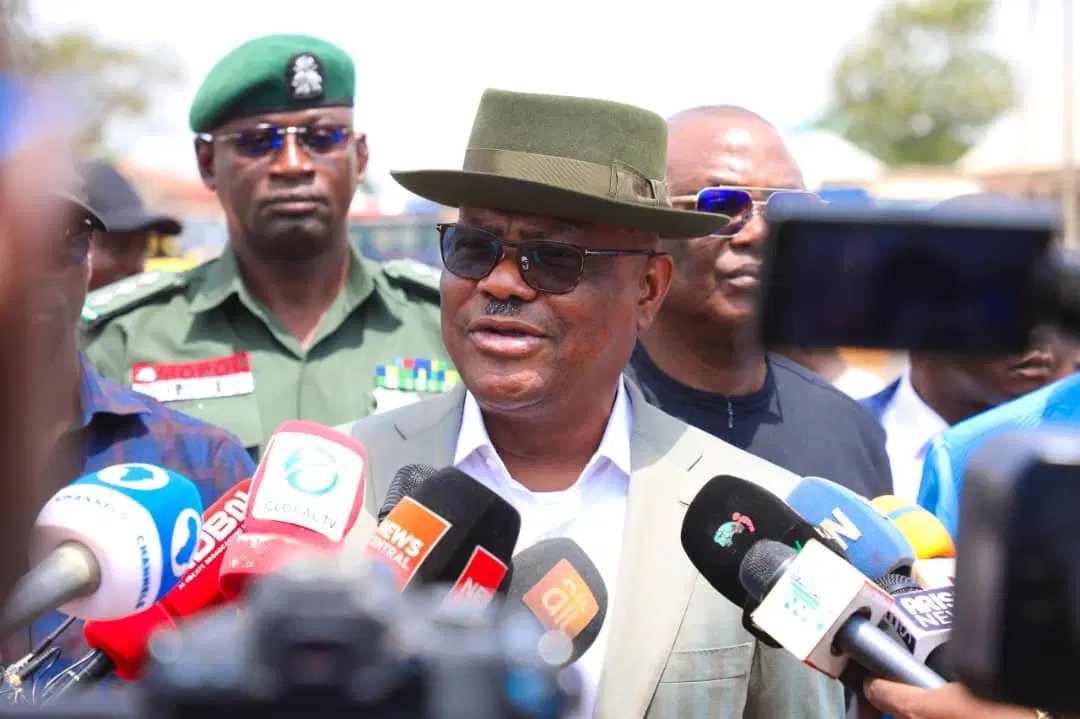
The battle for Nigeria’s presidency ahead of the 2027 general elections has taken another interesting turn, with media personalities Reuben Abati and Rufai Oseni offering sharply different views on the political influence of Rivers State and the role of Federal Capital Territory Minister, Nyesom Wike.
The disagreement emerged during a discussion on the 2027 presidential contest, where Abati argued that the people of Rivers State would ultimately determine the political direction of the state and, by extension, play an important role in deciding who emerges victorious in the presidential election.
Abati’s position comes amid growing political attention on Rivers State, which has remained one of the country’s most closely watched political territories because of its electoral strength and the influence of key political actors from the state.
With the 2027 presidential election drawing increasing attention, political calculations are already beginning to take shape across the country. Rivers, with its large voting population and strategic importance in the South-South region, is expected to attract intense competition from the major political camps.
However, Rufai Oseni disagreed with Abati’s assessment, arguing that the political equation could be more complicated than simply allowing the electorate in Rivers State to determine the eventual outcome.
Rufai reportedly maintained that Wike’s political influence could play a decisive role in the state’s electoral direction and could potentially translate into significant support for President Bola Tinubu in the 2027 presidential contest.
The disagreement highlights the growing importance of Wike in the political calculations surrounding the next presidential election.
Since his appointment as FCT Minister, Wike has remained one of the most prominent political figures in the country. His political decisions and alliances have continued to attract considerable attention, particularly because of his influence in Rivers politics.
The former Rivers State governor has also maintained a prominent position within Nigeria’s national political conversation, despite the political controversies surrounding him and his relationship with various members of the Peoples Democratic Party (PDP).
For Abati, however, the ultimate power remains with the voters.
His argument places emphasis on the ability of Rivers residents to make their own political choices at the ballot box rather than assuming that any individual political leader can automatically determine how the people will vote.
This perspective has injected a fresh dimension into the debate over whether political structures or popular sentiment will have greater influence on the 2027 presidential election.
Rufai’s counterargument, on the other hand, points to the importance of political machinery, alliances and influential personalities in determining electoral outcomes.
The disagreement between the two commentators reflects a much broader debate already emerging ahead of 2027: Will voters determine the outcome independently, or will political structures and powerful figures shape the direction of the electorate?
Rivers State could become a particularly important battleground if the presidential contest becomes closely fought between the major political parties.
The state’s political significance is not new. Rivers has historically attracted intense attention during presidential elections because of its large electorate, economic importance and strategic position in the Niger Delta.
Political observers are therefore likely to watch developments in the state closely as the 2027 election approaches.
The role of Wike will also remain a subject of intense discussion. His relationship with the Federal Government, his political network and his continued influence in Rivers could become important factors in the calculations of parties seeking victory in the state.
At the same time, the final decision will rest with eligible voters when they eventually cast their ballots.
For now, Abati and Rufai have offered two contrasting interpretations of the Rivers equation — one emphasising the power of the electorate and the other highlighting the influence of political leadership and organisation.
As Nigeria gradually moves toward another presidential election, one thing is becoming increasingly clear: Rivers State is likely to remain a major political battleground, and the struggle for its votes could become one of the defining stories of the 2027 race.
The big question now is whether Rivers voters will chart their own political course or whether the state’s powerful political structures will once again prove decisive.
The answer, ultimately, will come at the ballot box.
