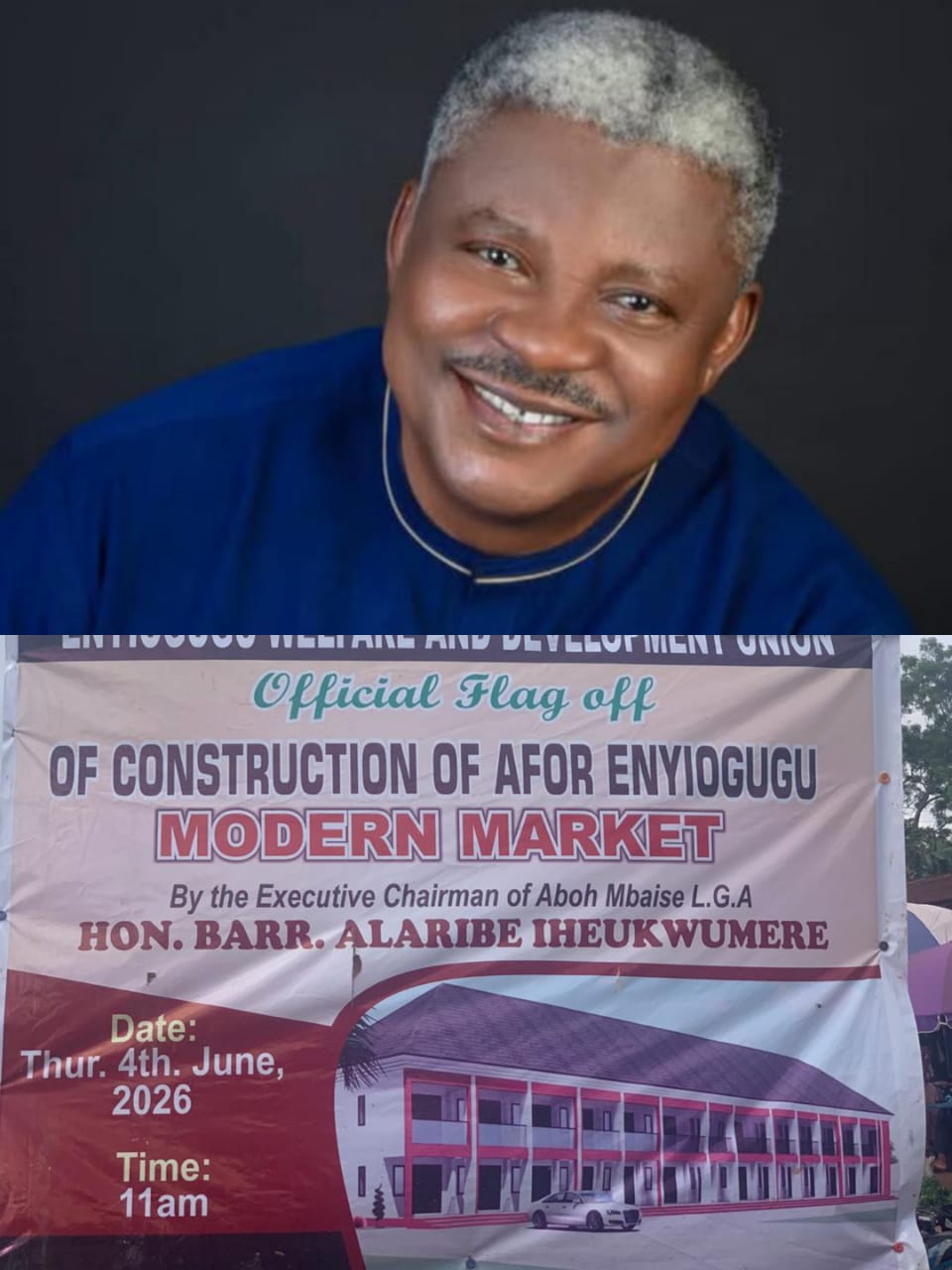
By Mavis Opara
Demolition has commenced at Afo Enyiogugu Market as part of a wider local government policy to rebuild and expand four major markets, including Orie Ovuru, Eke Nguru and Nkwoogu, the council chairman, Barrister Henry Alaribe Ihehukumere, has confirmed.
Speaking in an interview, the former commissioner said the project, which is being executed in partnership with the Enyiogugu Welfare and Development Union, would cover the entire market, not just a section of it, with lock-up shops to be built for big traders while petty traders selling items such as tomatoes and pepper would be relocated and accommodated within the market premises rather than at the frontage.
According to the chairman, the road from the Umuohiagu axis leading into the market would be redirected to empty directly into a new third road, which would also be lined with lock-up shops on both sides, while the state government has indicated support for the construction of a roundabout at the junction linking the airport road and Owerri Umuahia road.
On the question of affordability, Ihehukumere said traders who occupy shops within the market would do so under a rental arrangement, while big traders who take up the newly built lock-up shops outside the market would own them outright rather than lease them. He said the buy-rather-than-rent approach was designed to prevent non-indigenous traders from occupying the shops permanently and crowding out the people of Eniogugu, recalling that this had been a recurring problem in the past.
The market, which currently operates on a four-day cycle, would also be converted into a daily market to boost the local economy, the former commissioner added.
On the long-standing dump site occupying a large portion of the market, the council chairman said the council was aware of community complaints and that evacuation was already ongoing, with plans to convert the reclaimed land into additional shops. He said the East Waste Management Company, which manages waste for the state, had also shown interest in supporting the project.
Asked about the cost of the project, Ihehukumere said construction of each lock-up shop unit would cost about four million naira, though he could not immediately provide a full budget breakdown for the project. In a follow-up conversation, the chairman said the total cost of fully developing the market was estimated at not less than one billion naira, a figure he said would not come entirely from government coffers but would also draw on private individuals and outside investors taking up portions of the development.
He maintained that the project was being financed through a combination of local government appropriations, human resources and partnership funding, since, in his words, no government has enough money for all the projects it wishes to execute.
Responding to criticism that the timing of the project, ahead of the next election cycle, was politically motivated, the former commissioner said he was not a contestant in the coming election and that the market was being developed for all residents regardless of party affiliation, noting that some of the private individuals investing in the project belonged to opposition parties. He argued that residents being satisfied with development delivered under his administration was a legitimate basis for political goodwill.
