By Our Correspondent
Violence has erupted across western and central Mexico following the reported killing of Nemesio Rubén Oseguera Cervantes, widely known as “El Mencho,” the alleged leader of the Jalisco New Generation Cartel (CJNG).
The military operation, carried out in the state of Jalisco, is being described as one of the most significant blows against organized crime in recent years.
According to authorities, Mexican armed forces launched a targeted mission aimed at capturing the cartel leader.
The confrontation reportedly resulted in the deaths of Oseguera Cervantes and several suspected cartel members, while some security personnel were injured during the exchange. Officials said the operation followed months of intelligence gathering and strategic planning.
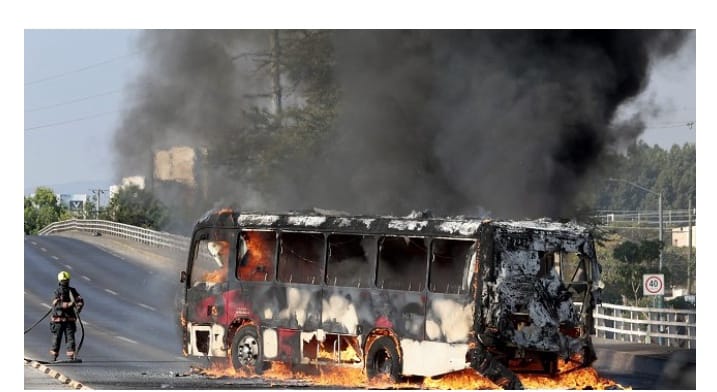
In the immediate aftermath of the announcement, coordinated retaliatory attacks broke out across multiple states. Armed groups set vehicles on fire, blocked major highways, and attacked businesses in what appeared to be a show of strength.
Major urban centers, including Guadalajara, witnessed road closures and scenes of panic as smoke billowed from burning cars and trucks. Authorities in affected areas urged residents to stay indoors while security forces worked to restore order.
The unrest spread beyond Jalisco into neighboring states, disrupting daily activities and prompting the cancellation of classes and public gatherings in some communities.
Public transportation services were temporarily suspended in certain areas, and additional security patrols were deployed to prevent further escalation. The wave of violence highlighted the cartel’s extensive network and its ability to mobilize armed cells quickly.
In a public address, President Claudia Sheinbaum called for calm and assured citizens that federal authorities were taking firm steps to stabilize the affected regions. She emphasized that security forces remain on high alert and that the government will not allow criminal organizations to intimidate the population.
El Mencho had long been regarded as one of Mexico’s most powerful and elusive drug traffickers, with alleged involvement in large-scale fentanyl, methamphetamine, and cocaine distribution networks. His organization grew into one of the country’s most dominant criminal groups, known for its aggressive tactics and territorial expansion.
While his death marks a significant victory for Mexican security forces, analysts caution that it could lead to internal power struggles within the cartel or provoke further violence as rival factions attempt to seize control.
Authorities are expected to maintain an increased security presence in the coming days to prevent additional retaliatory attacks and safeguard public safety.
