By our reporter
Despite viral claims, no official record links the Nigerian Film Corporation to a ₦3 billion solar streetlight project in the South-South. Budget anomalies across government agencies raise growing concerns about transparency and accountability.
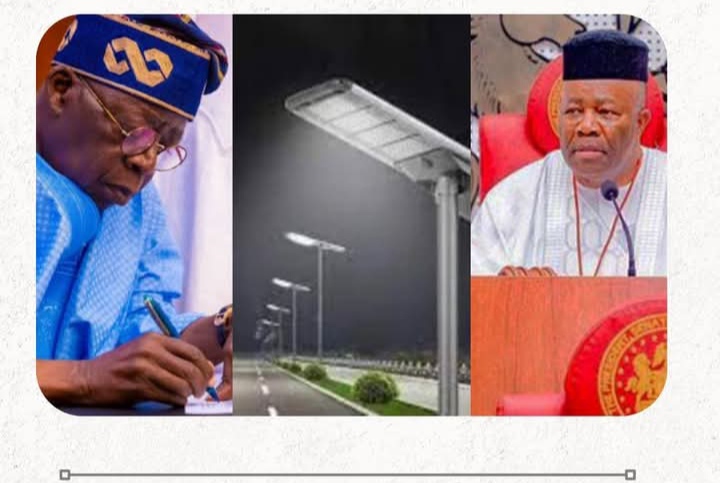
Amid increasing scrutiny over Nigeria’s 2024 federal budget, recent social media claims that the Tinubu administration allocated ₦3 billion to the Nigerian Film Corporation (NFC) for the installation of solar streetlights in the South-South region have drawn public attention. However, investigations reveal no official documentation or credible source confirming such a budgetary allocation.
While the claim continues to circulate widely online, reviews of federal budget reports, civil society watchdog data, and investigative journalism efforts show no line item or record directly tying ₦3 billion to the NFC for any infrastructure project, let alone solar electrification.
What has emerged instead is a broader trend in the 2024 budget: various federal Ministries, Departments, and Agencies (MDAs) receiving substantial funds for projects that fall outside their core mandates. This has raised serious questions about the budgeting process, project implementation, and value for money.
One notable example is the Federal Ministry of Arts, Culture, and Creative Economy, headed by Minister Hannatu Musawa, which allocated ₦290 million to install solar-powered streetlights in her hometown of Musawa Local Government Area in Katsina State. Many observers believe this project is inconsistent with the Ministry’s primary responsibilities.
In a similar case, the Agricultural and Rural Management Training Institute (ARMTI) in Ilorin received over ₦250 million to execute solar streetlight projects in communities in Bayelsa and Kano States—far removed from its core mandate of agricultural training and research.
Further investigations show that the Federal College of Produce Inspection and Stored Products Technology in Kano was allocated ₦1 billion for solar-powered streetlight projects across various states, including a ₦50 million streetlight project in Ikom/Boki, Cross River State.
According to a report by BudgIT, federal MDAs collectively spent ₦22.78 billion on solar installations in 2024 alone. Many of these projects were funneled through agencies with no background or capacity in energy infrastructure, suggesting that the spending may serve political or patronage purposes rather than actual developmental needs.
Despite the viral nature of the claim involving the Nigerian Film Corporation, there is no verifiable evidence to support it. The Corporation, which traditionally focuses on film development and industry regulation, has no mandate or capacity for energy or infrastructure projects.
If the ₦3 billion claim originated from a draft proposal, informal agreement, or political rumor, it has yet to appear in any official budget documentation or be confirmed by media or civic accountability groups.
Meanwhile, civil society organizations continue to call for increased oversight of the budgeting process. Groups like TrackaNG and BudgIT warn that diverting funds through non-technical agencies not only undermines effective service delivery but also creates opportunities for corruption and waste.
These developments point to a deeper issue in Nigeria’s public finance system, where political influence often shapes how and where resources are allocated—frequently to the detriment of transparency and performance.
While solar streetlights can provide vital improvements in rural infrastructure, their planning and execution should ideally lie with agencies that possess the technical capacity and public accountability to deliver such projects effectively.
As of now, the claim that the Tinubu administration budgeted ₦3 billion for the Nigerian Film Corporation to install solar streetlights in the South-South remains unverified and unsupported by any credible public record.
