By Our Correspondent
Nigeria’s 36 state governors have rejected allegations that state governments failed to properly account for funds accruing from the removal of the petrol subsidy, insisting that the responsibility for alleged mismanagement should not be placed at their doorsteps.
The governors, under the umbrella of the Nigeria Governors’ Forum (NGF), made their position known after their meeting at the NGF Secretariat in Abuja.
The development comes amid continuing public debate over the economic consequences of fuel subsidy removal and questions about how additional revenues generated from the reform have been deployed by governments at different levels.
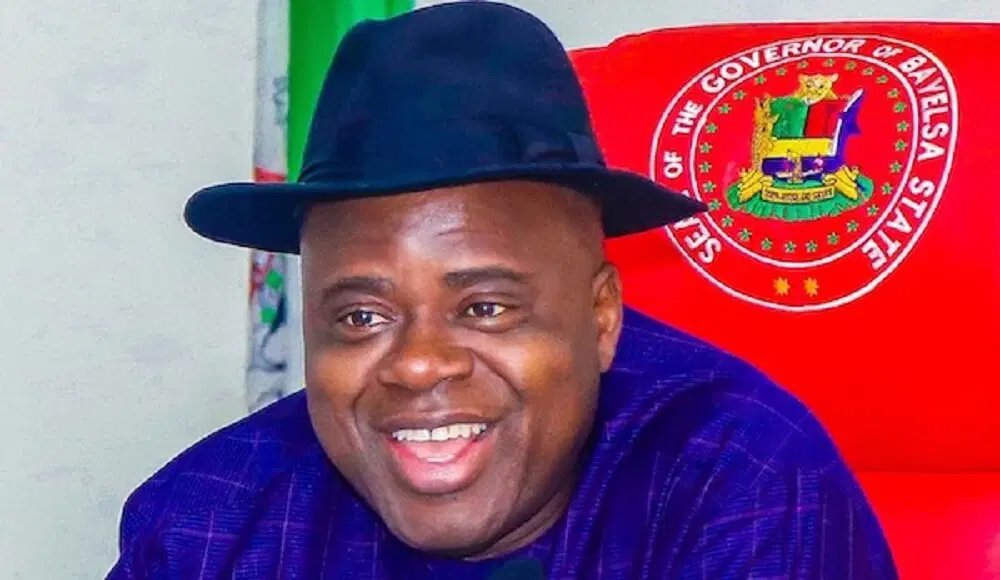
Bayelsa State Governor, Douye Diri, who presented the communiqué on behalf of NGF Chairman and Kwara State Governor, AbdulRahman AbdulRazaq, dismissed the suggestion that state governments had failed to account for funds received following the subsidy removal.
When specifically asked whether the governors would accept responsibility for allegations of poor accountability by sub-national governments, Diri gave a firm response.
“That cannot be true. That cannot be true. But we’ll leave that debate for another day,” he said.
The governors maintained that accusations concerning the alleged non-management of subsidy-removal proceeds by state governments should not be allowed to dominate the conversation.
The position is likely to generate further debate, particularly as Nigerians continue to demand greater transparency over public revenues and expenditure.
While rejecting the accountability allegations, the governors placed significant emphasis on the rising cost of transportation, describing it as one of the major factors contributing to the high cost of living in the country.
According to the NGF, the rising cost of moving people and goods has a direct impact on the prices of food and other essential commodities.
The governors explained that when the cost of transporting farm produce and other goods from one location to another increases, the additional expense is eventually transferred to consumers.
In practical terms, higher transport costs mean Nigerians pay more for commodities such as yam, garri, vegetables and other basic household necessities.
The governors therefore believe that reducing transportation costs could have a wider impact on the economy and provide some relief for households struggling with inflation.
As part of efforts to address the transportation challenge, the governors expressed support for the proposed National Affordable CNG Transit Programme, NACTP.
The initiative is designed to take advantage of the comparatively lower operating cost of Compressed Natural Gas, CNG, to reduce the fares paid by passengers.
Under the proposal, state governments would support CNG vehicle conversions, fleet deployment and the development of other infrastructure needed to make the programme work effectively.
The governors said the initiative has the potential to ease transportation costs but acknowledged that more work is still required to determine how the programme will be financed and implemented.
Diri said the governors would work with the private sector to increase the number of CNG-powered vehicles operating across the country.
He argued that because gas is cheaper than petrol, greater adoption of CNG-powered vehicles could eventually translate into lower transportation costs for Nigerians.
The Bayelsa governor said the expected benefits of cheaper transportation could extend beyond commuters.
According to him, reducing the cost of transportation could create a multiplier effect across different sectors of the economy.
If transport operators spend less on fuel, the governors believe the savings could eventually influence the cost of moving agricultural products, manufactured goods and other commodities.
For millions of Nigerians battling rising household expenses, any meaningful reduction in transportation costs could therefore provide much-needed relief.
Despite the governors’ endorsement of the CNG programme, the initiative is not yet fully operational nationwide.
Diri said the details of the implementation would be worked out between the Nigeria Governors’ Forum and the proponents of the programme.
Important issues, including financing, vehicle conversion, infrastructure development and participation by transport operators, will still have to be resolved before the programme can achieve its intended nationwide impact.
The governors nevertheless expressed optimism that the initiative could become an important component of efforts to cushion the economic impact of fuel subsidy reforms.
The meeting also considered opportunities for states to participate in major trade and investment events.
The Minister of Industry, Trade and Investment, Dr Jumoke Oduwole, briefed the governors on opportunities surrounding CANEX Weekend 2026 and the Intra-African Trade Fair 2027, both scheduled to take place in Lagos.
The governors said such platforms could provide states with opportunities to showcase investment-ready projects, promote local exports and tourism, and connect small and medium-sized businesses with investors and buyers from across Africa and beyond.
The Forum pledged its support for efforts aimed at increasing state participation in the events.
Since the removal of the petrol subsidy, Nigerians have experienced significant changes in transportation and household costs, while governments have also seen changes in revenues distributed through the federation account.
The debate over how those additional resources should be used and how governments should account for them therefore remains highly sensitive.
The governors have now made it clear that they do not accept responsibility for allegations that state governments have failed to account for subsidy-related funds.
At the same time, their decision to back an affordable CNG transportation programme suggests that reducing the economic burden on ordinary Nigerians remains a major concern for the states.
For many Nigerians, the bigger question is not simply who should take responsibility for the subsidy debate, but whether government policies can deliver tangible relief.
With transportation costs affecting virtually every aspect of daily economic activity, the success or failure of the proposed CNG programme could have significant consequences.
If properly financed and implemented, the initiative could potentially lower passenger fares and reduce the cost of moving goods across the country.
However, Nigerians will ultimately judge the programme by its impact on their daily lives.
For now, the governors have rejected the accountability blame and thrown their weight behind cheaper CNG-powered transportation as one of the measures they believe can help ease the pressure created by the fuel subsidy reform.
