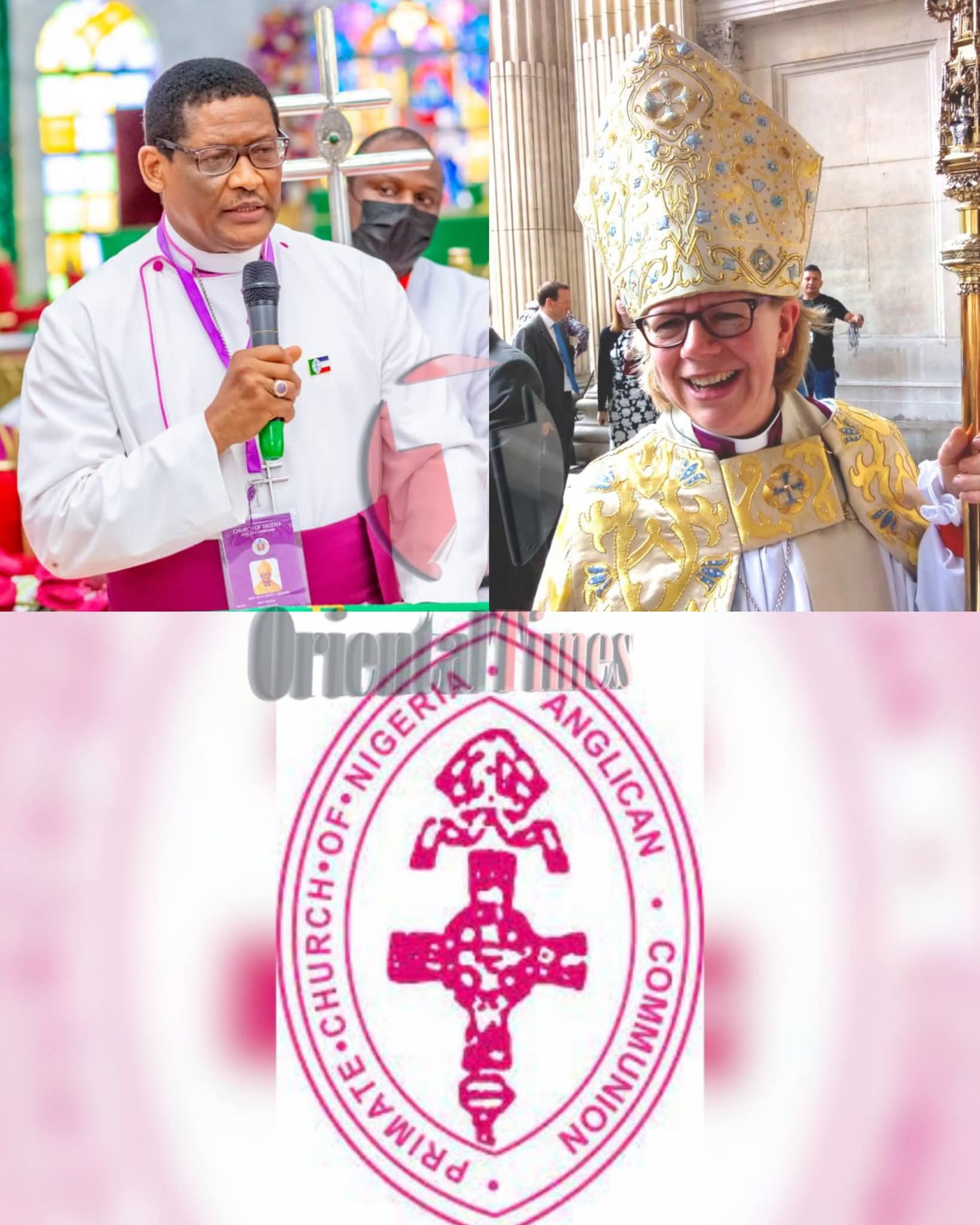
By our reporter
The Church of Nigeria (Anglican Communion) has officially severed spiritual ties with the Church of England following the historic appointment of Bishop Sarah Mullally as the Archbishop of Canterbury — the first woman ever to hold the role. Church leaders in Nigeria have condemned both her gender and her known support for same-sex blessings, calling the move a “departure from biblical truth.”
Announced on October 3, Mullally’s appointment has been hailed across the United Kingdom as a landmark moment for gender equality in the Anglican Church. Yet, in sharp contrast, the Church of Nigeria described the decision as “deeply troubling” and a clear indication that the Church of England has lost its theological and moral compass.
The Primate of the Church of Nigeria, Most Reverend Henry Ndukuba, said the Church could no longer in good conscience remain under the spiritual authority of Canterbury. He emphasized that the appointment of a female archbishop—along with what he called her “pro-gay stance”violated core biblical teachings.
This is not just about gender or sexuality, Archbishop Ndukuba said. It is about the authority of Scripture and the integrity of the gospel. The Church of England has chosen to follow the world rather than the Word.
Though Sarah Mullally has not advocated for full same-sex marriage rites within the Church, she has publicly supported blessings for same-sex couples a policy shift that has been met with strong resistance from conservative Anglican provinces, particularly in Africa and parts of Asia.
The Church of Nigeria, which represents more than 18 million Anglicans and is one of the Communion’s largest and most influential bodies, has been at the forefront of pushing back against what it sees as liberal theological trends within Western Anglicanism.
In its official statement, the Nigerian church declared itself “spiritually independent” of Canterbury and called on other biblically faithful provinces to do the same. It also reaffirmed its allegiance to the Global Anglican Future Conference (GAFCON), a conservative Anglican movement advocating for traditional teachings on marriage, sexuality, and church leadership.
This latest development intensifies a long-standing rift within the Anglican Communion. While churches in the Global North have increasingly embraced inclusive policies around gender and sexuality, many provinces in the Global South view these changes as incompatible with Scripture and tradition.
Sarah Mullally, formerly the Bishop of London and a trained nurse, acknowledged the global tensions during her inaugural address. She urged unity and dialogue, stating that the Anglican Communion must be “a family that finds strength in difference, not division.”
Despite her message of reconciliation, the Nigerian Church’s response signals a shift toward a more formalized realignment in global Anglicanism. Other conservative provinces including those in Uganda, Kenya, and Rwanda are reportedly considering similar moves.
The fracture highlights the deepening identity crisis within the Anglican Communion: can it remain a unified body while accommodating such vastly different views on core theological issues?
As the Communion stands at a crossroads, Nigeria’s bold decision may mark the beginning of a new era one in which spiritual authority is no longer centered on Canterbury, but instead redefined by a global and increasingly divided fellowship.
