By our reporter
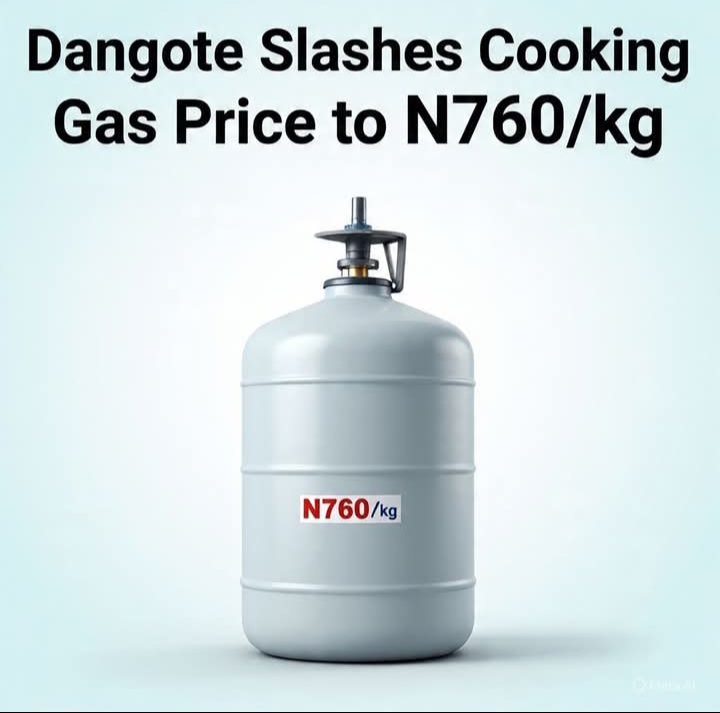
Dangote Refinery has announced a significant reduction in the ex-depot price of Liquefied Petroleum Gas (LPG), commonly known as cooking gas, lowering it to ₦760 per kilogram. This move is expected to ease the financial burden on Nigerian households and disrupt the existing pricing structure within the LPG market.
The price slash is part of a broader strategy by the refinery to undercut prevailing market rates, which have remained high in recent months despite improvements in domestic gas production. Retail prices in many parts of Nigeria still range between ₦1,000 and ₦1,200 per kilogram, far above what many families can comfortably afford.
Industry stakeholders have welcomed the reduction, noting that while the ex-depot price is a key factor in determining retail prices, it is not the only component. Transport costs, logistics, and middlemen markups still influence the final price consumers pay. Nonetheless, the move by Dangote is seen as a step in the right direction.
There is, however, some debate surrounding the timing and significance of the price cut. Some sources claim the refinery had already been selling cooking gas at ₦715 per kilogram since August, raising questions about whether the new announcement reflects an actual price drop or simply a formal declaration of existing pricing.
Despite the conflicting reports, the development is being viewed as a challenge to other depot operators and gas marketers, who may now be under pressure to adjust their own prices to remain competitive. If other players follow suit, it could lead to broader price reductions across the LPG market.
The decision also aligns with Dangote Refinery’s broader market ambitions. As the largest refinery in Africa, the company is seeking to position itself as a dominant force in Nigeria’s energy sector, not only in petrol and diesel but also in gas supply.
This latest move comes at a time when many Nigerians are struggling with high inflation and rising energy costs. Cooking gas, once seen as a cleaner and more affordable alternative to firewood and kerosene, has become less accessible for low- and middle-income households due to steep price hikes in recent years.
Observers will be closely monitoring the impact of this price cut on the retail market. If sustained and properly implemented across the supply chain, it could bring much-needed relief to millions of Nigerians and improve access to clean cooking energy.
