… Pro-Tinubu group seeks Igbo leaders’ intervention, proposes political alliance with Southeast ahead of 2027 presidential poll.
By Our Correspondent
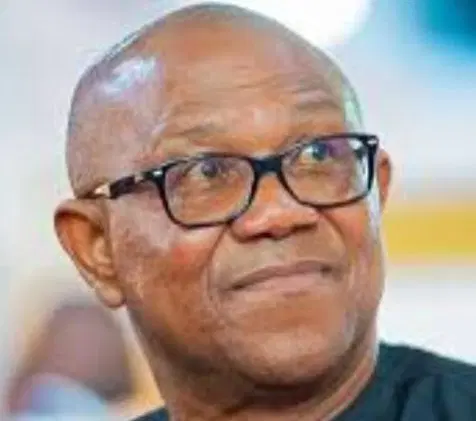
The political temperature ahead of Nigeria’s 2027 presidential election has risen another notch as a support group backing President Bola Tinubu says it is preparing to engage prominent Igbo leaders in an effort to persuade former Anambra State Governor, Peter Obi, to step down from the presidential contest and support Tinubu’s re-election bid.
The Southeast chapter of the Renewed Hope for Greater Nigeria (RHGN) disclosed the plan following a meeting focused on strengthening President Tinubu’s support base across the five Southeast states.
The group said it intends to approach the leadership of Ohanaeze Ndigbo, as well as respected elder statesmen including Chief Emeka Anyaoku and Commodore Ebitu Ukiwe, with a request that they intervene and appeal directly to Obi.
According to the Southeast leader of RHGN, Mazi Franklin Ngoforo, the proposed engagement is not designed to undermine Obi’s political influence or question his ambition. Rather, he said, the objective is to encourage the former governor to consider what he described as the long-term strategic interests of the Southeast.
Ngoforo argued that the 2027 presidential contest should not be viewed simply as a battle between individual politicians, but as an opportunity for the Southeast to negotiate a broader political arrangement that could improve its chances of producing Nigeria’s president in the future.
The group’s argument is built around the possibility of a political understanding between the Southeast and Southwest.
Ngoforo said the Southeast could consider supporting the Southwest in the 2027 election while simultaneously building a political alliance that could yield reciprocal support when the presidency becomes available to the region in the future.
He pointed to the constitutional limitation on presidential tenure, arguing that President Tinubu, if re-elected, would have only one additional term after 2027.
For the RHGN leadership, this creates an opportunity for what it described as a long-term political compact between regions.
Rather than concentrating solely on who wins or loses the 2027 election, the group wants the Southeast to consider the potential political dividends that could emerge from building strategic relationships with other parts of the country.
One of the central arguments being advanced by the Tinubu support group is that Obi’s decision to withdraw from the 2027 race would not necessarily mean the end of his presidential ambition.
Ngoforo reportedly described the proposed move as a postponement rather than an abandonment of Obi’s political aspirations.
The group believes that stepping aside in 2027 could allow Obi and his supporters to build a broader political arrangement capable of strengthening the Southeast’s bargaining position in subsequent presidential contests.
The proposal, however, remains an appeal from a pro-Tinubu political group. There is no indication that Obi has agreed to withdraw his candidacy or support Tinubu.
The planned approach to Ohanaeze Ndigbo and respected Igbo elder statesmen reflects the group’s belief that influential voices within the Southeast could help shape the political direction of the region.
The RHGN wants the elders to consider the wider political implications of the 2027 election and, if persuaded by its argument, lead a delegation to Obi.
The proposed intervention could potentially open a fresh conversation within the Southeast over whether the region should pursue an immediate presidential bid or negotiate a political alliance aimed at securing stronger prospects in the future.
With the 2027 presidential election approaching, the emerging proposal adds another layer to what is expected to be a highly competitive political contest.
Obi remains a major political figure with significant support, particularly among young Nigerians and voters who backed his presidential campaign in the previous election.
Any attempt to persuade him to withdraw would therefore represent a significant political undertaking.
For the Tinubu support group, however, the focus is on convincing Southeast stakeholders that strategic alliances could produce longer-term political benefits.
The group is expected to make its case to Ohanaeze Ndigbo and the elder statesmen before any possible engagement with Obi.
Whether the proposal will gain traction remains uncertain.
The idea of asking a major presidential contender to step aside is politically sensitive, particularly in a country where regional interests, party calculations and individual political ambitions often intersect.
For supporters of Obi, the 2027 election could be seen as another opportunity to pursue the presidency, while the Tinubu camp and its allies are seeking to consolidate support for the incumbent.
The proposed intervention by RHGN could therefore trigger wider discussions across the Southeast about political strategy, regional bargaining power and the future of the presidency.
For now, the message from the Tinubu support group is clear: it wants respected Igbo leaders to intervene, speak with Obi and persuade him that postponing his presidential ambition could ultimately serve the broader interests of the Southeast.
As the 2027 political season gathers momentum, the proposed meeting could become one of the early tests of whether regional political alliances can overcome individual ambitions in the race for Nigeria’s highest office.
