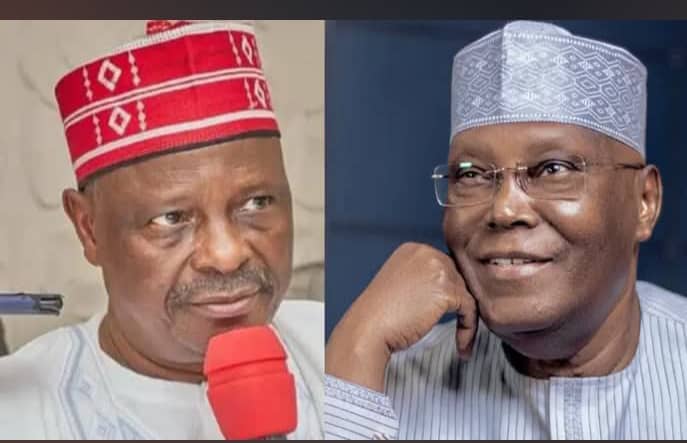
By Our Correspondent
Former Kano State Governor says his appeal to the former vice president is driven by their longstanding political relationship as opposition realignment gathers momentum ahead of the 2027 presidential election.
Rabiu Musa Kwankwaso has explained why he appealed to former Vice President Atiku Abubakar to step down from the 2027 presidential race in favour of former Anambra State Governor Peter Obi, highlighting their decades-long political relationship and the need for a new political arrangement ahead of the next general election.
Kwankwaso, a former governor of Kano State and a prominent political figure, said his decision to approach Atiku was not motivated by personal animosity but by the history of cooperation between the two politicians, who have remained influential figures in Nigeria’s political landscape for several decades.
The development comes as political parties and opposition leaders intensify consultations and negotiations ahead of the 2027 general election, with questions continuing to emerge over whether rival political interests can unite behind a common presidential candidate.
Speaking during an interview on Channels Television’s Politics Today, Kwankwaso disclosed that he had appealed to Atiku to reconsider his presidential ambition and give Peter Obi the opportunity to lead the opposition’s presidential campaign.
According to Kwankwaso, his relationship with Atiku dates back several decades, with the two politicians having worked together politically since 1993.
He explained that their longstanding association made it possible for him to have an honest conversation with the former vice president about the future of Nigeria’s opposition and the need to consider a different political direction ahead of 2027.
Kwankwaso’s remarks suggest that his appeal was based partly on personal familiarity with Atiku and partly on his assessment of the political choices facing opposition leaders as preparations for the next presidential election gather pace.
The former Kano State governor also revealed that he sought to communicate his position through a group of Fulani visitors who had come to his residence.
Kwankwaso said he asked them to speak with Atiku about the possibility of withdrawing from the presidential contest and supporting Obi’s ambition.
The disclosure has drawn attention to the informal consultations and personal relationships that often play an important role in Nigerian politics, particularly when political leaders are trying to resolve disagreements over presidential tickets and candidate selection.
Such appeals can become significant in the run-up to an election, when political parties and influential figures seek to build alliances capable of attracting support across different regions and voter groups.
Peter Obi, the former governor of Anambra State and Labour Party presidential candidate in the 2023 election, remains a prominent figure in discussions about the future of Nigeria’s opposition.
His performance in the 2023 presidential election, particularly his support among younger voters and in parts of southern Nigeria, established him as a major contender in national politics.
Kwankwaso’s appeal for Atiku to step aside in Obi’s favour therefore raises fresh questions about the possibility of a broader opposition arrangement ahead of the 2027 election.
A successful alliance would require agreement among political leaders on the presidential candidate, party platform, campaign strategy and distribution of political responsibilities. It would also require the parties and their supporters to accept compromises that may not satisfy every competing ambition.
Atiku Abubakar, a former vice president and veteran presidential contender, has remained a major force in opposition politics for many years.
His political experience, national profile and established support base make him an important figure in any discussion about opposition unity.
However, the question of who should lead the opposition into the 2027 election remains sensitive, as competing ambitions and differences among political blocs could complicate efforts to agree on a single candidate.
Kwankwaso’s appeal brings that challenge into sharper focus, particularly as political leaders weigh the benefits of pursuing individual ambitions against the possibility of forming a united electoral front.
Whether Atiku will accept Kwankwaso’s suggestion remains uncertain.
The latest development underscores the difficult balancing act facing opposition politicians as they prepare for another contest against President Bola Tinubu and the ruling political establishment.
Political observers have long argued that cooperation among opposition leaders could influence the shape of the 2027 presidential race. However, achieving such cooperation would depend on more than public appeals, requiring sustained negotiations and agreement among the relevant political parties.
Differences over leadership, political influence, regional representation and the choice of a presidential candidate could all affect the outcome of those discussions.
Kwankwaso’s intervention is therefore likely to fuel further debate about whether the opposition can overcome internal differences and settle on a candidate capable of building a broad national coalition.
At the heart of Kwankwaso’s remarks is a question that could shape the political landscape ahead of the next general election: should opposition leaders prioritise their individual presidential ambitions or consider a common candidate in pursuit of a broader political objective?
By appealing to Atiku to step aside for Obi, Kwankwaso has placed the issue of political compromise firmly in the spotlight.
His explanation also highlights the role that longstanding relationships can play in attempts to negotiate alliances, even when the politicians involved have separate ambitions and political constituencies.
As preparations for the 2027 election continue, attention will remain on whether the appeal leads to further consultations among the opposition’s leading figures or whether the competing presidential ambitions will persist.
For now, Kwankwaso’s position is clear: he wants Atiku to consider withdrawing from the race in favour of Obi, arguing that their long political relationship makes such an appeal possible. The response from Atiku and the broader implications for opposition unity will be important developments to watch as the election approaches.
