BY COLLINS OPUROZOR
Something remarkable is happening in Imo State. The state has emerged as Nigeria’s fourth-largest state economy, with a GDP of ₦7.68 trillion. Only Lagos, Rivers and Akwa Ibom are ahead of it. Imo is even ahead of Delta, one of Nigeria’s biggest oil-producing states. That is a big story. It is even bigger when you remember that Imo does not have the commercial size of Lagos or the huge oil production base of Rivers and Akwa Ibom.
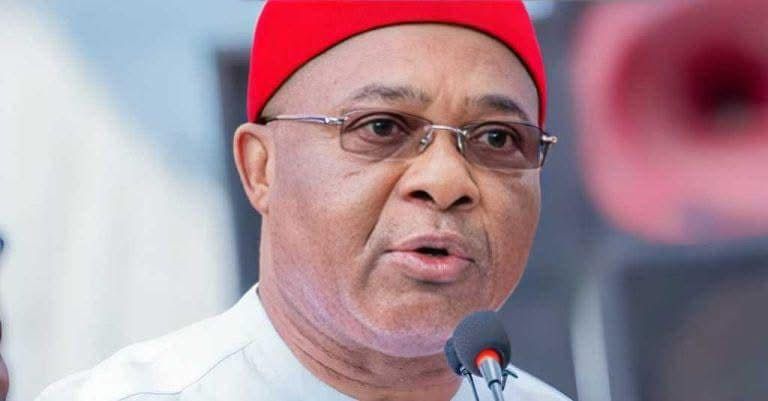
Clearly, the figures reported by BudgIT reveal the strength and depth of Imo’s economic base. And they provide a useful window into the progress the state has made under Governor Hope Uzodimma.
The transformation did not happen by accident. Uzodimma started with something very basic: infrastructure. You cannot build a strong economy on bad roads and broken connections. Businesses need roads. Farmers need access to markets. Investors need to move goods and people. That is why the administration made roads, urban renewal, electricity and connectivity major priorities. Across the state, old roads have been reconstructed and new ones opened. Urban areas redesigned. Power infrastructure revamped. The idea is simple: make it easier to live, work and invest in Imo. And when the cost of doing business falls, economic activity rises.
Uzodimma also understood that government alone cannot create a prosperous economy. The private sector must come in. Investors must come in. Banks must come in. Industries must come in. That is why the administration has worked to make Imo more attractive to investors. Land administration has been modernised and digitized. Investment processes are being streamlined. Security has been strengthened. The message to investors is simple: Imo is open for business. This is an important shift. The government is not trying to do everything itself. It is creating the conditions for businesses to grow and create wealth.
The first Imo Economic Summit was another major step. Uzodimma brought business leaders, investors and financial institutions to the state. They were shown what Imo has to offer. They were introduced to opportunities in energy, agriculture, manufacturing, technology, real estate, tourism and other sectors. That matters. Investors put money where they see opportunity and confidence. For years, Imo had plenty of potential but struggled to convert that potential into large-scale investment. Uzodimma has deliberately changed that narrative. He is selling Imo not as a state waiting for development, but as a state ready to receive capital and build businesses.
There is also the question of what Imo already has. The state sits on enormous natural resources, particularly oil and gas. But Uzodimma’s approach goes beyond simply extracting crude oil. The goal is to build an economy around these resources. Gas can power industries. It can support manufacturing. It can feed petrochemical and fertiliser industries. Agriculture can move from subsistence production to agro-processing. Digital technology can create new businesses for young people. Tourism and hospitality can generate another stream of income.
So, what does the ₦7.68 trillion figure really tell us? It tells us that Imo has achieved an incredibly strong economic base. More importantly, it shows what is possible when government begins to connect infrastructure, investment, energy, security and enterprise. Fourth-largest today may be the headline, but the real ambition of this God-sent governor is to make Imo Nigeria’s most productive and investment-friendly economy tomorrow.
