By Our Correspondent
Senate President Urges Serving Governors to Prioritise Their Mandates as Remarks Spark Political Reactions
Senate President Godswill Akpabio has cautioned serving state governors against abandoning their responsibilities to the people in pursuit of other political ambitions, stressing the importance of completing their mandates before seeking new positions.
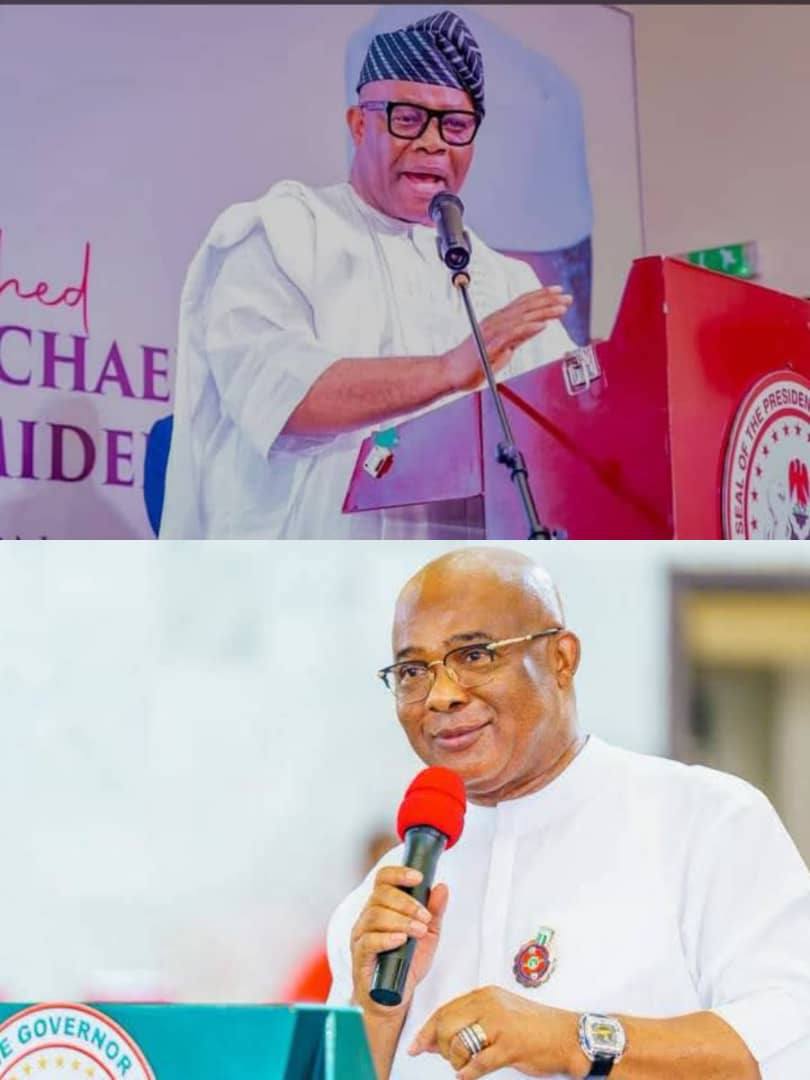
Akpabio made the remarks during the inauguration of the All Progressives Congress (APC) Presidential Campaign Council in Abuja, where he addressed governors within the ruling party, with particular reference to Imo State Governor, Hope Uzodimma.
Speaking at the event, the Senate President reminded the governors that their primary responsibility was to the people who elected them and urged them not to become distracted by ambitions for other political offices while still in power.
According to Akpabio, his own experience as governor taught him the importance of serving out the constitutionally permitted tenure and remaining focused on the responsibilities entrusted to elected leaders.
“And for my brothers who are Governors, I want you to know that you must not abandon your people. I did eight years as a Governor, and the Constitution says you should do eight years. There is no need for you to start eyeing another position that is not available,” Akpabio said.
The Senate President’s statement has drawn attention to the debate over political ambition and the responsibilities of elected officials, particularly governors approaching the end of their tenures.
His remarks suggest that governors should give priority to governance, service delivery and the fulfilment of their electoral promises rather than allowing future political calculations to overshadow their current duties.
For many political observers, the statement raises an important question about how elected leaders balance their personal political aspirations with the expectations of the people who entrusted them with public office.
Governors are often regarded as influential political figures in their respective states, and their decisions can have significant implications for infrastructure development, security, education, healthcare and economic growth.
Consequently, expectations remain high that serving governors will continue to discharge their responsibilities effectively throughout their tenures.
Akpabio’s direct reference to Imo State Governor Hope Uzodimma has attracted particular interest, with political watchers examining the possible significance of the comment.
The remark comes amid broader political discussions about the next steps available to governors after completing their constitutionally permitted terms in office.
Some outgoing governors in Nigeria have historically pursued senatorial seats or other political positions after leaving the Government House, making succession plans and future ambitions recurring topics in the country’s political landscape.
However, Akpabio’s statement, as quoted, does not explicitly establish that Uzodimma has decided to contest for a Senate seat or that the governor has formally announced any such ambition.
His reference to the Imo State governor has nevertheless fuelled discussions about whether the Senate President was offering general advice to governors or expressing concern about particular political calculations within the APC.
The statement has also generated conversations on social media, where political developments involving prominent Nigerian leaders frequently attract competing interpretations.
Some observers may interpret Akpabio’s words as a reminder that public service should come before personal ambition, while others may view the comments through the lens of internal political relationships and the calculations surrounding future elections.
The discussion reflects a wider public interest in the conduct of political officeholders and the extent to which they fulfil their responsibilities before pursuing new opportunities.
Nevertheless, interpretations of Akpabio’s intentions should be distinguished from the actual words he delivered, as the quoted statement does not, by itself, confirm a dispute or establish a specific political agreement involving the governors concerned.
Beyond the personalities involved, Akpabio’s comments have brought renewed attention to the relationship between political ambition and public accountability.
For citizens, the central issue is whether elected officials remain focused on the promises they made during their campaigns and the practical needs of the communities they represent.
The completion of a governor’s tenure provides an opportunity for the public to assess the administration’s achievements, unfinished projects, policy decisions and overall record of service.
At the same time, Nigeria’s constitutional framework permits eligible citizens to seek public office, subject to applicable legal requirements. Political ambition, therefore, is not inherently inconsistent with public service; the question is whether the pursuit of another position undermines an officeholder’s existing responsibilities.
Akpabio’s intervention has consequently added another dimension to conversations about leadership, accountability and political succession within the APC.
The remarks may also attract attention within the ruling party as politicians consider future leadership arrangements and electoral contests.
Governors often play important roles in party organisation, candidate selection and political mobilisation. Their decisions after leaving office can influence the balance of political interests within their states and across the party.
However, the precise political implications of Akpabio’s statement remain uncertain without further clarification from the Senate President or the governor concerned.
For now, the comments have placed the issue of governors’ post-tenure ambitions under the spotlight and renewed debate over the responsibilities that accompany public office.
Akpabio’s message is clear in its central emphasis: serving governors should not lose sight of the people who elected them while contemplating their political futures.
Whether the remarks were intended as general counsel or carried a more specific political message for Hope Uzodimma remains a matter of interpretation.
Ultimately, the debate goes beyond individual politicians. It touches on a fundamental expectation of democratic leadership: that public office should be treated first and foremost as a responsibility to the people, with political ambitions pursued within the law and without neglecting existing obligations.
What is your take on Akpabio’s statement? Should governors focus on delivering on their promises until the end of their tenure before pursuing another political office?
