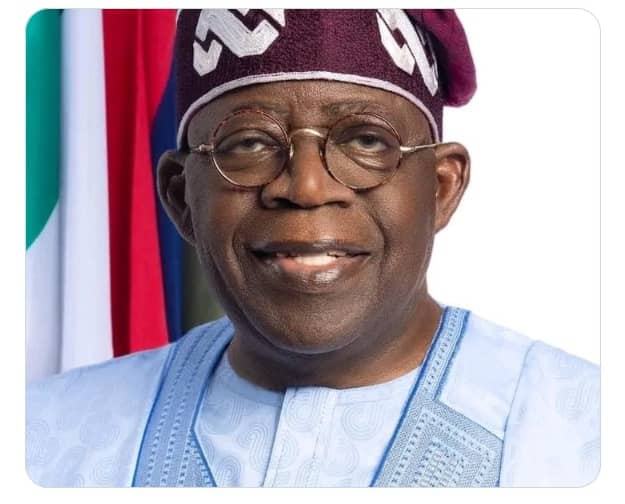
…President mounts fresh legal defence as pressure grows over unredacted FBI and DEA files, citing privacy laws and alleged political motives.
By Our Correspondent
President Bola Tinubu has asked a United States court to block the public release of his unredacted records held by the Federal Bureau of Investigation and the Drug Enforcement Administration, giving four major reasons why the documents should remain confidential.
The President’s position was contained in filings submitted by his lawyers before the United States District Court for the District of Columbia in response to a request by American transparency activist, Aaron Greenspan, seeking access to the records under the US Freedom of Information Act.
Tinubu’s legal team argued that the requested records are protected by provisions of the US Freedom of Information Act and the Privacy Act, insisting that there is no legally recognised public interest sufficient to override the President’s privacy rights.
The lawyers also challenged the motivation behind the request, alleging that the plaintiff has an ulterior motive for seeking documents containing Tinubu’s name.
According to the President’s legal team, the US FOIA is primarily designed to promote transparency about the activities of government agencies and not to expose private information about individuals contained in law-enforcement files.
They further relied on privacy protections contained in the legislation, particularly provisions dealing with personal information contained in law-enforcement records.
The legal battle has attracted renewed attention in Nigeria because of the longstanding controversy surrounding Tinubu’s historical dealings with US law-enforcement authorities.
The issue became particularly prominent during the build-up to the 2023 presidential election, following the emergence of documents relating to a 1993 civil forfeiture proceeding in the United States.
A US court in Illinois ordered the forfeiture of about $460,000 held in an account linked to Tinubu after US authorities alleged that the funds represented proceeds of narcotics trafficking or were connected to prohibited financial transactions.
Tinubu has consistently denied wrongdoing, while his political camp has maintained that the forfeiture proceeding was civil in nature and should not be interpreted as a criminal conviction.
The latest court dispute, however, goes beyond the old forfeiture case, as the records being sought include FBI investigative materials and interview records relating to Tinubu.
Greenspan’s request reportedly includes the FBI’s entire file concerning Tinubu, as well as FBI Form 302 interview records from investigations dating back to 1992 and 1993.
The demand for the documents has generated strong reactions, with critics arguing that Nigerians have a legitimate interest in information concerning the background of a sitting President.
Tinubu’s lawyers, however, have rejected the argument that the political importance of the Nigerian President automatically creates a public interest under American disclosure laws.
They argued that the mere fact that Tinubu is a public figure does not eliminate his privacy rights under US law.
The President’s lawyers also questioned the relevance of releasing the documents to any assessment of his fitness to hold political office in Nigeria.
They maintained that such an argument does not create the kind of public interest recognised by the US Freedom of Information Act.
Another significant aspect of the legal defence is the allegation that the request may be politically motivated.
The lawyers argued that the demand appears focused primarily on obtaining documents bearing Tinubu’s name rather than exposing misconduct by US government agencies.
They urged the court not to allow the FOIA process to be used as a means of obtaining sensitive personal information simply because the individual concerned is a prominent political figure.
Meanwhile, the FBI has separately argued that releasing some of the records could expose law-enforcement techniques and potentially endanger the lives or physical safety of individuals.
The agency has invoked several FOIA exemptions in withholding portions of the records, including exemptions relating to personal privacy, confidential sources, investigative techniques and safety concerns.
The FBI recently asked the court for permission to provide some of its explanations to the judge privately and under seal, arguing that it could not publicly disclose the full basis for withholding certain information.
The development has added another layer to the legal battle over the records.
For Tinubu, the latest court filing represents a fresh effort to prevent the publication of documents that could generate further political controversy in Nigeria.
Opposition politicians and critics, however, have continued to insist that transparency is necessary, particularly when the records concern a serving Nigerian President.
The dispute is also unfolding against the backdrop of preparations for the 2027 general elections, when Tinubu is expected to seek re-election.
Political observers believe that any significant disclosure from the records could have political consequences, particularly if the documents contain information that generates fresh questions about the President’s past.
On the other hand, the withholding of the records is also likely to fuel further speculation among critics who have long demanded greater disclosure.
The legal question before the US court is therefore not simply whether the public wants to see the documents, but whether American law permits the requested records to be released after taking privacy and law-enforcement considerations into account.
The case does not itself establish that Tinubu committed a criminal offence, nor does the current legal filing amount to a criminal prosecution against him.
Rather, the immediate dispute centres on whether records held by US government agencies should be released, withheld or partially redacted under applicable American law.
As the court proceedings continue, attention will remain focused on whether the judge accepts Tinubu’s arguments or orders further disclosure of the long-sought FBI and DEA records.
For now, Tinubu’s message through his lawyers is unequivocal: the President wants the US court to keep his unredacted records out of the public domain, arguing that privacy protections, the absence of a recognised public interest and the alleged motives behind the request justify continued withholding of the documents.
The outcome could have significant implications for the continuing debate over transparency, presidential accountability and access to sensitive law-enforcement records in the United States and Nigeria.
