….the vision, funding and socio-economic impacts.
Comr. Noble Ewurum
Akabo, Ikeduru LGA
Imo State.
7th May 2024.
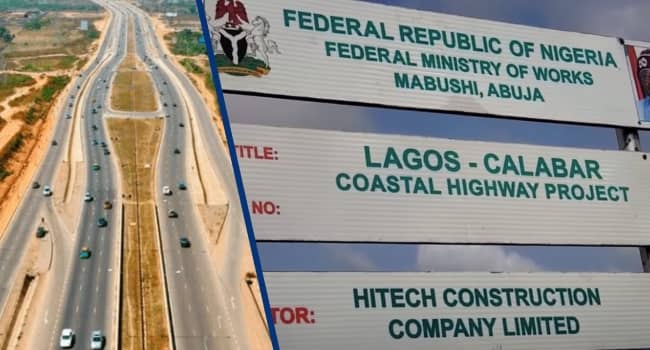
The Lagos-Calabar coastal road project is undoubtedly Nigeria’s most ambitious transport infrastructural project since 1960. In terms of scope, distance covered, and connectivity, not even the 3rd Mainland Bridge in Lagos, the 2nd Niger Bridge in Onitsha/Asaba, or the Abuja-Kano expressway comes close. It is simply a world-class magnificent project.
Historically, the idea for a major coastal federal road in Nigeria was first conceptualized in first republic precisely in 1957 by the then Federal Commissioner of Finance, Late Chief Festus Okotie-Eboh, who hails from present-day Delta State. He proposed the development of a network of rail and road routes from Lokoja-Benin City-Koko-Warri-Onitsha to aid the movement of goods.
Specifically, he proposed the Koko-Ogheye-Epe dual carriageway project that was to traverse from Delta State to Ondo State terminating at Epe in Lagos. This road is basically meant to shorten travel distance between these two regions (south-west and south-south). However the project couldn’t see the light of the day, it died on paper.
In 2001, during the administration of Gen. Olusegun Obasanjo (Rtd) as civilian President, he commenced the construction of the coastal road from Warri to Calabar, now East-West road. While the Lagos State government administration of then-Governor, Asiwaju Bola Ahmed Tinubu was also independently planning to build a coastal road that will span the entire Lekki-Epe axis, which he foresaw as the next major economic frontier in Lagos and the entire country.
However, in 2010, the government of President Goodluck Jonathan couldn’t sustain the execution of the East West road project, rather he awarded the Koko-Ogheye-Epe road through the NDDC to Levant Construction Ltd.
Twenty (20) years after leaving office as Governor of Lagos, President Bola Ahmed Tinubu sagaciously dust-up these vision-documents and decided to marry his Lagos coastal road vision with that of Late Chief Festus Okotie-Eboh’s Koko-Ogheye-Epe coastal road vision in addition to the thinking behind the East-West road to come up with a variant of the Lagos-Calabar coastal road that we have now.
For the purposes of enlightenment, the Lagos-Calabar Coastal Highway is simply a 700km mega-highway that starts from Victoria Island in Lagos and ends in Calabar, Cross River State. It will pass through Ogun, Ondo, Delta, Bayelsa, Rivers, and Akwa Ibom states before terminating at Calabar. This coastal highway is the first of its kind in the world. First and foremost, it comprises a 10-lane boulevard with five lanes on each side of the dual carriageway and a standard gauge train track in the middle. Concrete pavement technology is to be adopted in the construction of the entire stretch of the road.
Interestingly, it also has two major spurs. First is the Badagry-Sokoto road, which will connect the South West to the North Central and the North West through the shortest route possible, terminating at Sokoto. The second spur is the Enugu to Abakaliki to Otukpo to Nasarawa terminating at Apo in Abuja; this is essentially an arterial road that connects the six geopolitical zones.
FUNDING:
The total estimated cost of the 700km Lagos-Calabar Coastal road project is put at N15.6 trillion. The funding model for the Lagos-Calabar coastal road project is EPCF (Engineering, Procurement, Construction, and Financing) where the Federal Government will put up a counterpart financing of an estimated sum of N4.68 trillion, which is 30% while the contractor, Hitech Construction company will put up an estimated sum of N15.6 trillion, which is 70%.
Furthermore, to kickstart the commencement of the project, the Federal government has decided to finance the construction of the first 47km in phase 1 of the road project, which runs from Ahmadu Bello Way, Victoria Island to the Lekki Deep Sea port. The contract sum of N1.06 trillion was awarded for this section by FEC to Hitech, and construction is ongoing with unprecedented speed.
I must emphasize that this funding model adopted by the President Tinubu administration is the best model possible, considering the country’s revenue size. This is a monumental infrastructural project being majorly funded by the private sector. This is made possible because the coastal road is extremely viable.
SOCIO-ECONOMIC IMPACTS:
-JOB CREATION
I boldly submit that the fears of job losses as a result of the demolition of structures on the coastal road’s right of way, especially in Lagos (only Lagos) cannot be compared to the immense amount of new jobs that this massive project will create, both directly and indirectly.
Already, the project has started creating thousands of direct and indirect jobs courtesy of the actual construction work currently ongoing at multiple sections of the 47km stretch. The construction of the railway component of this coastal road is another source of massive job creation. Hundreds of permanent jobs will also be required after completion of construction, as people would be engaged to carry out toll management, road maintenance, etc.
In a short while, new mega industries, filling stations, CNG stations, auto-mechanic workshops, shopping malls, hotels, etc., will dot the iconic coastal road axis while creating many jobs in the process. This is one of the direct effects of having that road.
–GDP GROWTH
The Lagos-Calabar coastal project is a very important project with unparalleled economic value. This is a road that connects Nigeria’s biggest economic zone, Lekki Free Trade Zone housing the Dangote refinery, Lekki Deep sea port, and many existing and potential industries in the south and the north via a 10-lane dual carriageway. The potential impact of this road on our GDP growth is huge, considering the fact that it will facilitate an increase in economic activity as well as improve ease of movement of goods and people and invariably ease of doing business.
Don’t forget, the road will drastically cut down travel time between Lagos to the South-South and South-East to less than six hours through an alternative shorter route and open new corridors of development. With the 1000km spur from Badagry in the Atlantic coast to Sokoto on the edge of the Sahel, we would also have a North-South modern highway that smoothens land transport, connectivity, and trade between the north and south.
–TOURISM
Research shows that the most immediate impact of the new Lagos-Calabar coastal road is definitely going to be a massive boost in the tourism business.
Every known major coastal road across the world is always a magnet for tourism. The Lagos-Calabar coastal road, which will be one of the best coastal roads in the world upon completion. The coastal road is not going to run exclusively on the coastline. For example, around the Eleko axis, the road alignment is not on the beach front. Even in the landmark and Oniru beach axis, after construction of the coastal road, the tourism value of these areas would skyrocket.
It simply requires innovation by players in the tourism industry to make the most out of the coastal road. In fact, there are countless beaches along the path of the coastal road in Lagos, Ondo, Bayelsa, Rivers, and Akwa Ibom that can become Nigeria’s top tourist destinations.
The IlASHE ISLAND BEACH off the Lagos coast along the Badagry Creek with its beautifully arranged coconut trees and crystal white sand is one of such that can benefit from the Badagry spur.
The IBENO BEACH in Akwa Ibom, which is the longest sand beach in West Africa and stretching for about 30 kilometers from Ibeno to James Town along the Atlantic coastline of Akwa Ibom State, is yet another tourism goldmine, to mention but a few.
In conclusion, I want to salute this hallmark of extraordinary leadership of President Bola Ahmed Tinubu for reviving the visions of our founding fathers and also having the conviction that this dream can be achieved.
“True Leaders motivate the power and energy their followers to get things done, they poorly have the sense of fear and they overlooks the concept of the odds against them. Their focus is not usually on the present nor on the obstacles that may stand on the way of their vision but on how to attain that vision by surmounting the obstacles.
NIGERIA WILL SUCCEED!!!
