By Our Correspondent
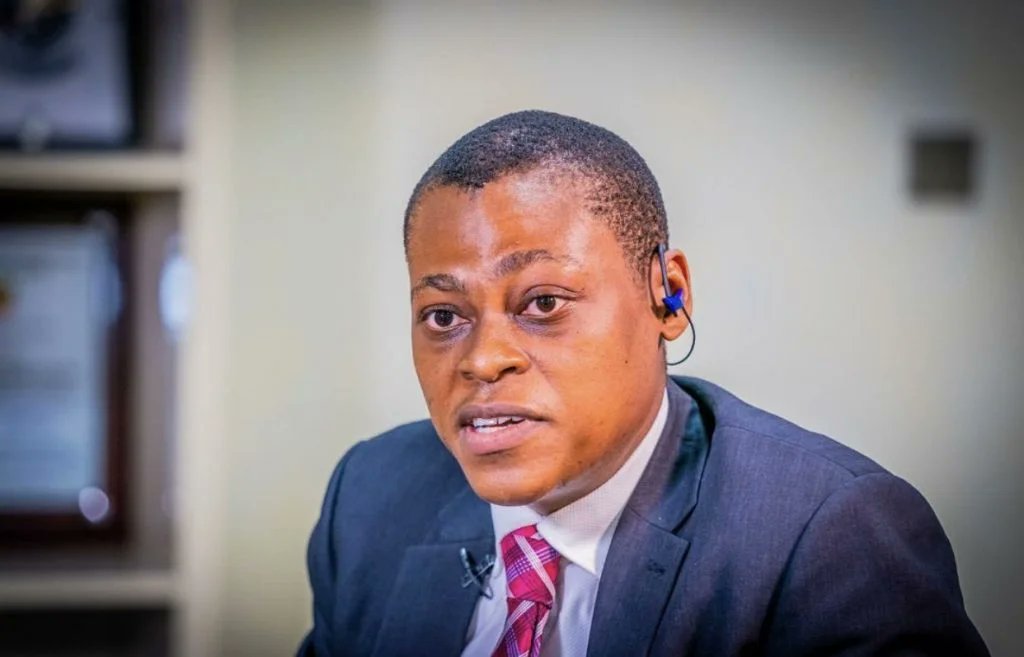
Media personality and broadcaster Rufai Oseni has stirred fresh debate over who deserves credit for the development of the Dangote Refinery, arguing that former President Muhammadu Buhari and former Central Bank of Nigeria Governor, Godwin Emefiele, played significant roles in making the landmark project possible.
Oseni’s position challenges the growing narrative that President Bola Ahmed Tinubu should receive the major credit for the refinery, which has emerged as one of Nigeria’s most significant industrial projects.
According to Oseni, the foundation for government support and financial intervention that helped the refinery project progress was laid during the administration of former President Buhari.
He also highlighted the role of former CBN Governor Emefiele, whose tenure coincided with a critical phase of the refinery’s development.
The Dangote Refinery, located in the Lekki area of Lagos State, is designed to process up to 650,000 barrels of crude oil per day, making it one of the largest single-train refineries in the world.
The massive facility was developed by the Dangote Group at a cost running into billions of dollars and was conceived as a major step towards transforming Nigeria from a major crude oil exporter and refined petroleum importer into a country capable of meeting a substantial portion of its domestic fuel needs.
Oseni argued that the history of the refinery stretches across several administrations and that credit for such a massive project should not be attributed to only the government in power at the time of its commissioning.
He maintained that the Buhari administration provided important policy and financial support during a crucial period of the refinery’s development.
The former CBN governor, Emefiele, was also identified by Oseni as one of the key government officials involved in initiatives that supported major investments in Nigeria’s productive sectors during the period.
The comments have since added another layer to the ongoing political debate over the contributions of successive Nigerian governments to the refinery project.
While the Tinubu administration has played a role in supporting the refinery’s operations and the broader push for domestic refining, Oseni believes the contributions of previous administrations should not be overlooked.
The debate is particularly significant because the Dangote Refinery has become closely associated with Nigeria’s efforts to address its long-standing fuel supply challenges.
For decades, Nigeria has produced crude oil but relied heavily on imported refined petroleum products due to inadequate domestic refining capacity. The situation has placed considerable pressure on the country’s foreign exchange reserves and exposed consumers to international market fluctuations.
The Dangote Refinery is expected to help change that situation by increasing domestic refining capacity and reducing Nigeria’s dependence on imported petroleum products.
Beyond fuel production, the facility is expected to contribute to job creation, industrial development, government revenue and Nigeria’s position as a major energy hub in Africa.
The refinery’s development, however, was not achieved overnight. It involved years of planning, financing, construction, government engagement and private-sector investment.
This long development timeline is at the heart of Oseni’s argument that several administrations and individuals contributed to bringing the project to fruition.
The debate over who deserves political credit is therefore likely to continue, particularly as successive governments seek to highlight their contributions to major national projects.
For many Nigerians, however, the bigger question is whether the refinery can deliver its expected economic benefits, including a more stable supply of locally refined petroleum products and reduced dependence on imports.
Regardless of the political debate, the Dangote Refinery remains a major milestone in Nigeria’s industrial history, with the potential to reshape the country’s petroleum sector and strengthen its position in the global energy market.
Oseni’s remarks have nevertheless reignited an important conversation: when a major national project takes years and crosses multiple administrations, who should ultimately receive the credit?
