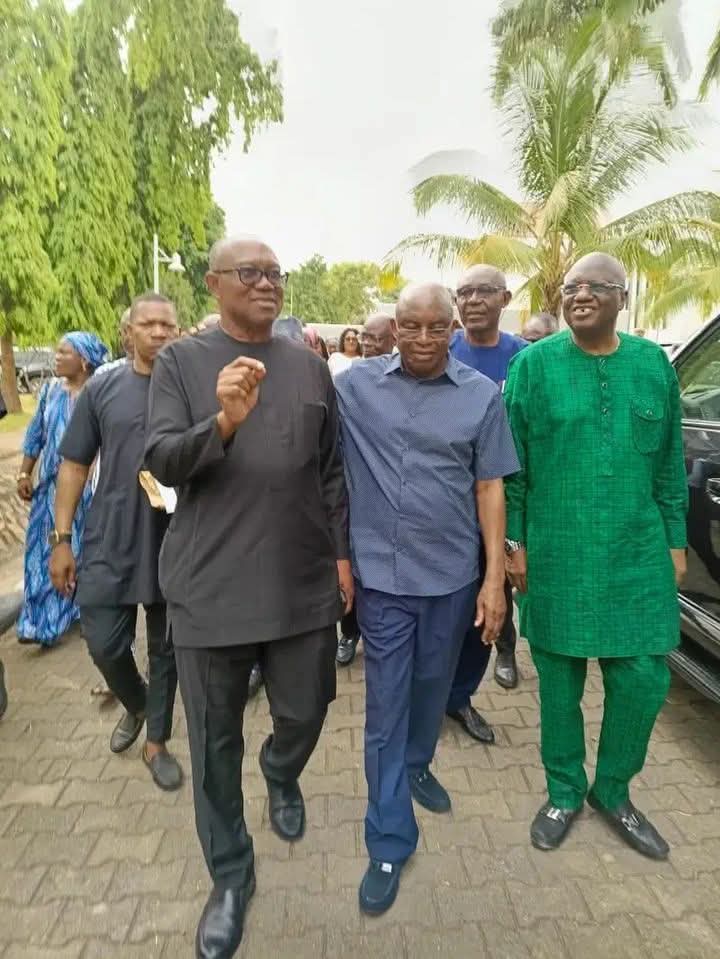
Political significance and quiet symbolism emerge at Justice Ezedi’s funeral in Anambra
In a moment steeped in history and quiet political symbolism, former Anambra State Governor and Labour Party leader, Mr. Peter Obi, reunited with African Democratic Congress (ADC) National Chairman, Senator David Mark, at the burial ceremony of the late Justice Emmanuel Nri Ezedi in Nri, Anambra State.
Justice Ezedi, a highly respected jurist, made legal history in Nigeria when he delivered the landmark ruling in 2007 that nullified the impeachment of Governor Obi—an act that reinforced judicial independence and earned him national acclaim. His death marks the end of an era, but the gathering it inspired brought new political possibilities into focus.
The burial, held Thursday, saw the convergence of several high-profile figures, but it was the unexpected meeting between Obi and Mark that stirred quiet attention. While there were no public political statements, their shared presence was viewed by observers as more than ceremonial—it was reflective of mutual respect and perhaps an emerging realignment in the Nigerian political space.
The African Democratic Congress demonstrated strong grassroots presence at the event. Led by its Anambra gubernatorial candidate, Mr. John Nwosu, ADC supporters turned out in large numbers to welcome Senator Mark at the Chinua Achebe International Airport. The party’s visibility at the burial underscored its increasing political traction in the Southeast, especially ahead of the 2025 elections.
“The presence of our national chairman here today is a sign of our party’s commitment to justice, history, and unity,” said Mr. Nwosu in a brief media chat. “Justice Ezedi stood for truth in a time of darkness, and we honor that courage.”
While both Obi and Mark refrained from making political comments, their calm exchange drew attention from journalists, party members, and dignitaries alike. Analysts suggest that such encounters could have implications for future cooperation among reform-minded political actors—particularly as Nigeria approaches a critical electoral cycle.
Justice Ezedi was remembered not only for his pivotal judicial role but also for his dedication to constitutional order and fearless independence from political pressure. His funeral became a platform for reflection on justice, integrity, and the need for credible leadership in Nigeria’s democracy.
As dignitaries departed Nri, the question lingered: Could this symbolic reunion foreshadow a broader political alliance in 2025?
