By Our Correspondent
Former Aviation Minister defends Obasanjo’s record, traces Nigeria Airways’ collapse to years of decline, and reveals efforts to secure unpaid entitlements for ex-workers.
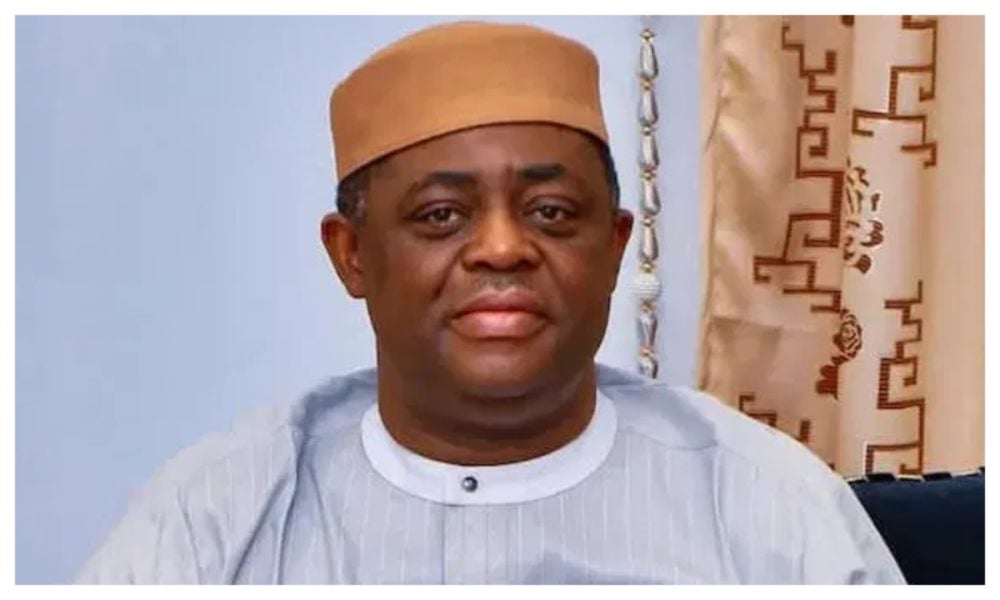
Former Minister of Aviation, Femi Fani-Kayode, has responded to the controversy surrounding the liquidation of Nigeria Airways, defending former President Olusegun Obasanjo and arguing that the airline’s problems long predated the administration that eventually wound it up.
Fani-Kayode’s remarks came amid a disagreement with the Minister of Aviation and Aerospace Development, Festus Keyamo, over responsibility for the airline’s collapse and the prolonged failure to pay the pensions and gratuities owed to its former workers.
The exchange has renewed public attention on the troubled history of Nigeria’s former national carrier, the circumstances surrounding its liquidation in 2004, and the lingering consequences for thousands of employees who spent years waiting for their entitlements.
Fani-Kayode argued that it would be misleading to blame Obasanjo alone for the collapse of Nigeria Airways without considering the airline’s condition before the former president assumed office in 1999.
According to Fani-Kayode, the airline had experienced years of deterioration, financial difficulties and operational challenges before the return to democratic rule.
He reportedly contrasted the airline’s condition in 1979, when Obasanjo left office as military head of state, with its situation in 1999, claiming that Nigeria Airways had gone from having 32 functional aircraft to being left with only one non-functional aircraft.
The former aviation minister cited the figures to support his argument that the airline’s decline was a long-running problem rather than the result of decisions taken by a single administration.
His position is that any fair assessment of Nigeria Airways’ collapse must take into account the years of difficulties that preceded the Obasanjo administration.
The controversy followed comments by Keyamo concerning former Vice-President Atiku Abubakar and the role of the Obasanjo administration in the liquidation of Nigeria Airways.
Atiku served as vice-president throughout Obasanjo’s civilian presidency from 1999 to 2007, a period that included the airline’s eventual liquidation in September 2004.
Keyamo’s criticism focused on the administration’s responsibility for the decision and its consequences for former employees who were left awaiting their pensions, gratuities and other outstanding benefits.
The aviation minister’s position has brought renewed scrutiny to the decisions made by the administration and the extent to which political leaders who served during that period should answer questions about the airline’s fate.
Fani-Kayode, however, has urged a broader historical perspective, maintaining that the airline’s problems were already severe before the government took the decision to liquidate it.
Beyond defending Obasanjo, Fani-Kayode also spoke about efforts made during his time in government to address the outstanding entitlements of former Nigeria Airways employees.
He reportedly disclosed that he presented a memorandum to the Federal Executive Council in 2006 seeking approval for the payment of the workers’ outstanding benefits.
According to his account, the proposal was rejected by the council.
The disclosure has added another dimension to the controversy, raising questions about the challenges successive administrations faced in resolving the financial obligations left behind by the defunct airline.
For former employees and their families, the central issue has remained the same: securing the money they are owed after years of uncertainty and repeated calls for government intervention.
Nigeria Airways was once the country’s national carrier, serving domestic and international routes as a symbol of Nigeria’s presence in global aviation.
Over the years, however, the airline encountered mounting financial pressures, operational difficulties and questions about its management and sustainability.
Its eventual liquidation in 2004 marked the end of its operations but did not immediately resolve the outstanding obligations to its former workforce.
Many former employees subsequently spent years seeking the payment of their pensions and gratuities, turning the airline’s collapse into a long-running labour and public-finance issue.
The controversy continues to raise broader questions about the management of government-owned enterprises, accountability for public resources and the responsibility of successive administrations to protect workers’ interests.
Fani-Kayode also commended Keyamo over efforts to address the outstanding obligations owed to former Nigeria Airways workers.
Reports surrounding the controversy have referred to a ₦36 billion intervention for the settlement of the former employees’ entitlements under President Bola Tinubu’s administration.
The reported intervention has renewed hopes that the prolonged dispute over unpaid benefits could finally move towards a resolution.
However, the crucial issue for the affected workers remains the timely and transparent disbursement of the funds to eligible beneficiaries.
While political leaders continue to debate who should bear responsibility for the airline’s collapse, former employees remain concerned with obtaining the entitlements they have waited years to receive.
Fani-Kayode also addressed the debate surrounding Atiku’s position during discussions about the payment of former Nigeria Airways workers’ benefits in 2006.
He reportedly declined to disclose how Atiku voted or argued during the cabinet deliberations, while maintaining that decisions taken by the Federal Executive Council were collective decisions for which the administration shared responsibility.
His remarks have further complicated the political debate, which now involves not only the circumstances of Nigeria Airways’ liquidation but also the roles played by individual officials within the government at the time.
The disagreement highlights the difficulty of separating individual responsibility from collective cabinet decisions when assessing controversial government policies years after they were implemented.
The exchange between Fani-Kayode and Keyamo has brought an old national issue back into the spotlight, with both the airline’s history and the welfare of its former employees at the centre of the discussion.
For Fani-Kayode, the argument is that Obasanjo inherited an airline already in serious decline and should not be held solely responsible for its eventual collapse.
For those questioning the liquidation, however, attention remains on the decisions taken in 2004, the treatment of affected workers and the years it took for meaningful progress to be reported on their outstanding entitlements.
Ultimately, the debate over Nigeria Airways goes beyond political exchanges between former and serving officials. It raises fundamental questions about accountability, public-sector management and the obligation of government to honour commitments made to workers.
As the controversy continues, the most important measure of progress will be whether the former employees receive the benefits they are owed and whether lessons from the airline’s collapse are applied to the management of Nigeria’s aviation sector.
The big question remains: Was the collapse of Nigeria Airways primarily the result of decades of accumulated mismanagement, the decisions taken by the administration that liquidated it, or a combination of both? The answer requires a careful examination of the airline’s history, official records and the responsibilities of successive governments.
