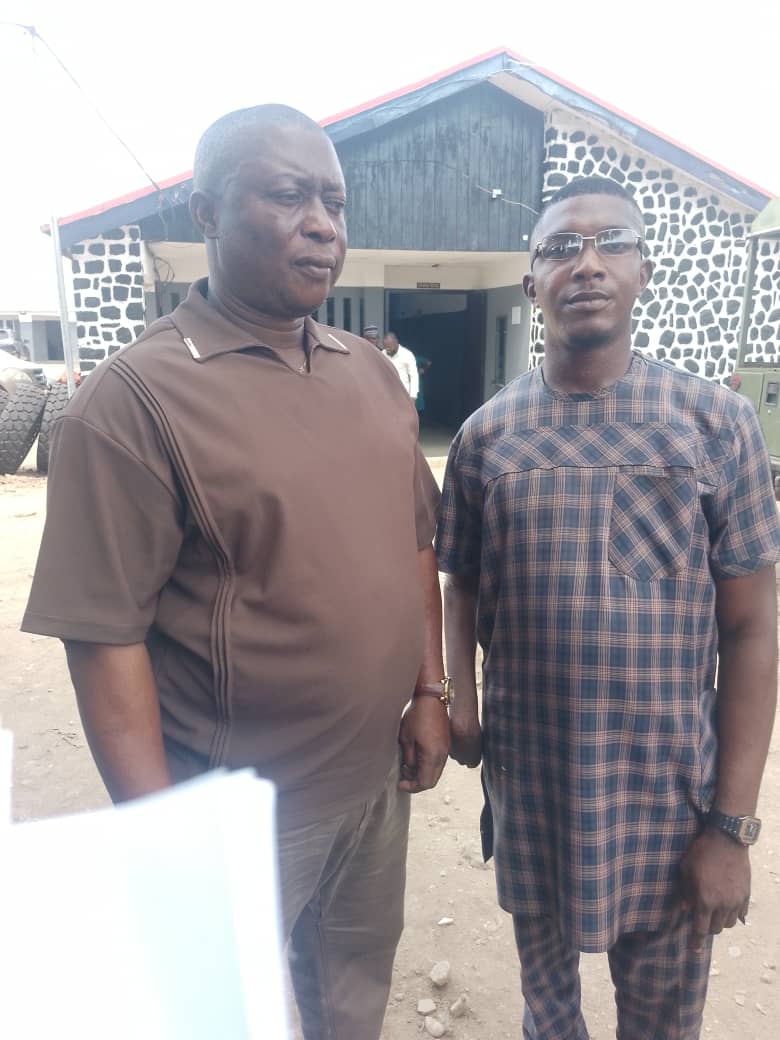
In the wake of the growing volume of allegations and emotionally charged narratives circulating across social media regarding the Anti-Kidnapping Unit, popularly known as Tiger Base, I consider it a moral duty as a survivor of insecurity, a disability-rights advocate, and a public servant to speak with truth, balance, and responsibility.
Yesterday, I paid a personal visit to the Commander of the Anti-Kidnapping Unit, ACP Oladimeji Odeyeyiwa, fondly known as OLA, with one clear objective: to seek first-hand clarification on the allegations being widely circulated against his unit. I chose engagement over assumption, dialogue over distance, and facts over speculation.
The interaction was deeply enlightening, revealing, and clarifying. Beyond media narratives and online commentaries, I encountered a security institution operating within a defined mandate, grappling daily with complex security threats, and navigating the difficult balance between protecting lives and maintaining order in a challenging environment. The engagement reinforced a fundamental truth that must never be compromised in any serious society: on sensitive matters of public interest and security, verification must always precede conclusions.
It is also important to place this conversation within a personal and factual context. It is on record that in 2022, I was kidnapped, an experience that left an indelible mark on my life and strengthened my resolve to advocate for the vulnerable. During that critical and terrifying period, ACP Oladimeji Odeyeyiwa (OLA), Commander of Tiger Base, played a pivotal role in the efforts that led to my release. This is not a political statement, emotional appeal, or social media spin it is a factual account rooted in lived experience.
I am alive today to serve, to advocate, and to speak because decisive security actions were taken at a moment when my life hung in the balance. That reality alone compels me to insist that no conversation about security should be reduced to one-sided accusations or mob judgment.
This does not suggest, in any way, that security institutions should be immune from scrutiny. On the contrary, accountability, professionalism, and respect for human dignity must always remain central to any security operation. Where allegations exist, they must be examined lawfully, transparently, and objectively. However, it is both unjust and dangerous to condemn an entire institution without verified facts, especially one that has recorded measurable impact in combating kidnapping and violent crime in Imo State.
As an advocate for persons with disabilities and other vulnerable groups, I am acutely sensitive to issues of abuse and excesses. I firmly maintain that any proven misconduct by individuals should be addressed decisively through lawful processes. But we must be careful not to weaponize allegations in ways that weaken institutions genuinely working to secure lives and restore public confidence.
Responsible discourse demands facts, not assumptions; engagement, not hysteria; truth, not sensationalism. Social media trials may generate attention, but they rarely generate justice or solutions. Our collective interest should be to strengthen security institutions through constructive engagement and continuous reform, not to dismantle them through unverified narratives.
In conclusion, I urge Ndi Imo and the wider public to approach this matter with wisdom, restraint, and a commitment to truth. Security is not an abstract debate it is about real people, real families, and real lives. I stand today as a living testimony to the impact of effective security intervention, and as a firm believer that truth, when calmly and consistently presented, will always prevail over noise.
Ability in Disability.
When facts speak, conscience listens.
Amb. Comr. Iyke G. Ononuju
Ability in Disability
Advocate for Persons with Disabilities.
