By: Kelechi Uzomah, 08064075316
The battle for who succeeds Governor Hope Uzodimma in 2027 is not merely another political contest in Imo State. For the people of Okigwe senatorial zone, it is a reckoning—a moment of historical justice long deferred.
As the debate over the Imo Charter of Equity intensifies, leaders from Owerri zone are making passionate appeals for Okigwe’s support, arguing that it is now their turn to produce the next governor. But these appeals ring hollow in the ears of Okigwe stakeholders who remember all too vividly what happened in 2011—when Owerri zone stood by while their mandate was brutally truncated.
The Charter That Was Broken
The Imo Charter of Equity was no casual political arrangement. Adopted in June 1991 by the state’s founding fathers at Chief Emmanuel Iwuanyanwu’s Glass House in Owerri, it was a solemn covenant designed to rotate the governorship among the three senatorial zones—Owerri, Orlu, and Okigwe—for eight years each. The principle was simple: fairness, justice, and the avoidance of rancorous political competition.
After Orlu zone’s Achike Udenwa completed his eight-year tenure (1999–2007), the baton passed to Okigwe zone, and Ikedi Ohakim was elected governor. The Charter was working. Justice was being served.
Then came 2011.
The Betrayal of 2011
When Ohakim sought re-election to complete Okigwe’s eight-year turn, Owerri zone politicians did not stand with their Okigwe brothers. Instead, they threw their weight behind Rochas Okorocha—a candidate from Orlu zone—effectively truncating Okigwe’s mandate after just four years.
The election results tell the story: Okorocha polled 336,859 votes to Ohakim’s 290,490. Okigwe’s four remaining years were stolen, and the Charter of Equity lay in ruins.
Today, Orlu zone has occupied the Douglas House for nearly 24 years since 1999—Udenwa’s eight years, Okorocha’s eight years, and now Uzodimma’s tenure. Owerri zone had only the brief seven-month stint of Emeka Ihedioha. And Okigwe? Okigwe has been left with nothing but memories of what was taken from them.
Why “Forgiveness” Is Not the Question
Some may argue that it is time to move on, that Okigwe should forgive and support Owerri in 2027. But this misses the point entirely. The issue is not personal animosity toward Owerri—it is about fundamental justice.
As Okigwe leaders have consistently maintained, it is only logical, fair, and just to allow Okigwe zone to complete its rightful turn, which was viciously truncated in breach of the Charter. To restore the Charter of Equity, Okigwe must be allowed to complete eight years on the seat, after which power can then move to Owerri zone.
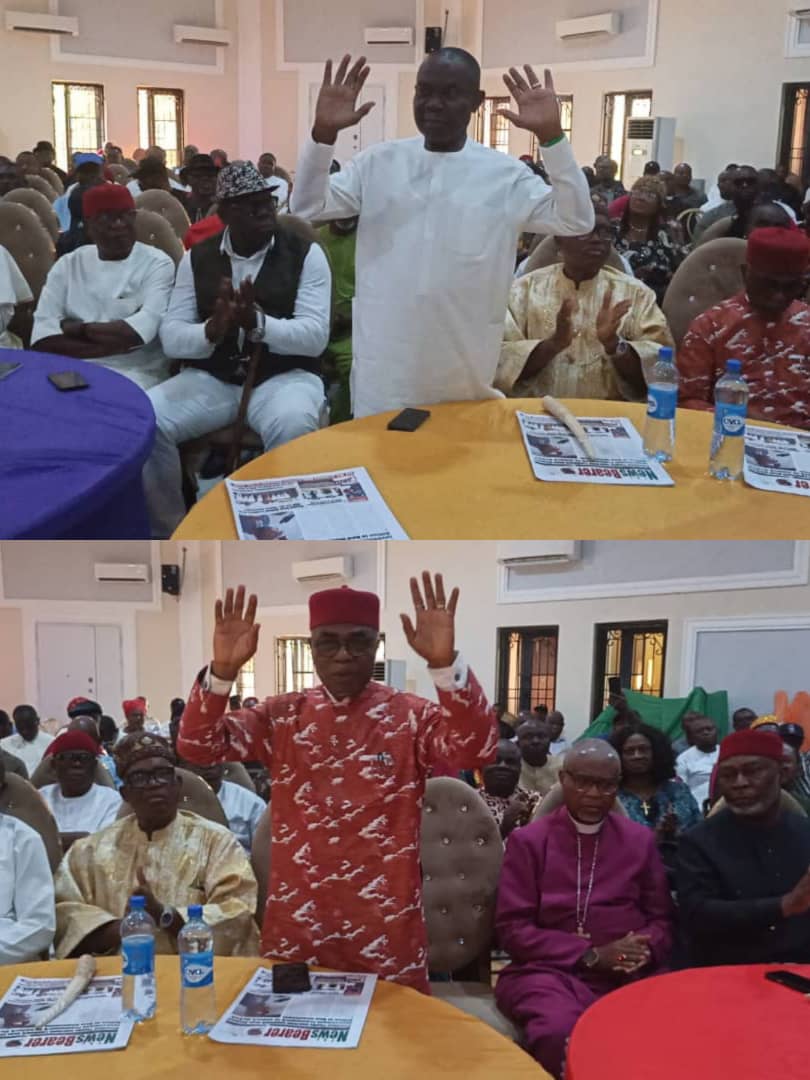
When Owerri leaders recently visited Okigwe stakeholders at Chief Tony Chukwu’s residence in Ehime Mbano, seeking support for an Owerri candidate in 2027, they were met with a polite but firm refusal. Former Ohanaeze Ndigbo President-General Nze Fidelis Ozichukwu Chukwu posed the question that hangs over this entire debate: had Owerri truly come to engage Okigwe in dialogue, or had they simply come to seek support for their own project?
That question remains unanswered.
The Path Forward
Governor Hope Uzodimma has wisely advised Owerri leaders to dialogue with Okigwe zone, acknowledging that the Charter of Equity issue is far from settled. But dialogue cannot mean a one-sided demand for Okigwe’s surrender.
If Imo State is serious about building a charter of equity that will endure for generations, it must begin by rectifying the injustice of 2011. That means allowing Okigwe zone to complete its mandate before the baton passes to Owerri.
The people of Okigwe have not forgotten 2011. They have not forgiven. And until justice is served, they will not support any candidate from a zone that stood by while their mandate was stolen.
In 2027, Okigwe will not be asking for favors. They will be demanding what is rightfully theirs—the completion of an unfinished mandate that was taken from them in the most bitter of betrayals.
Kelechi Uzomah is the National President of Okigwe Zone Youths Mandate
