By Our Correspondent
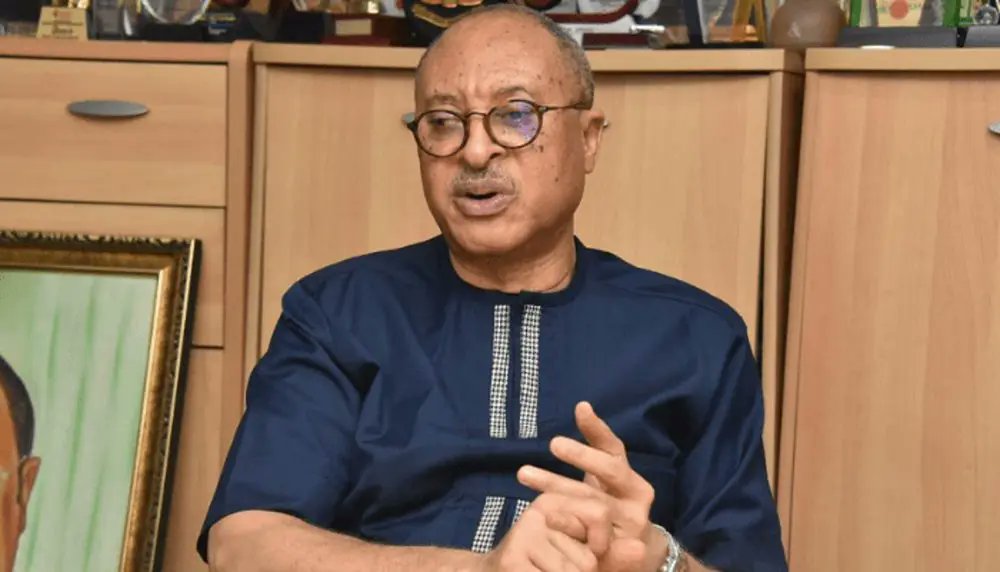
Political economist, Professor Pat Utomi, has described the outcome of the 2026 Osun State governorship election as a powerful reminder that political dominance is never permanent, declaring that “every evil has an expiry date.”
Utomi made the remark while reflecting on the recently concluded election, which saw incumbent Governor Ademola Adeleke emerge victorious. His comments have added a broader political and democratic dimension to the outcome, portraying the election as evidence of the power of citizens to influence the direction of governance through the ballot box.
According to the political economist, the Osun election demonstrated that voters can overcome attempts to manipulate the democratic process. In an earlier reaction, Utomi argued that the election showed that citizens could defeat rigging when they remain determined to protect their votes.
His latest statement, that “evil has an expiry date,” has attracted attention across political circles, with many interpreting it as a message about the temporary nature of political power and the consequences of actions that undermine public confidence in democracy.
For Utomi, the significance of the Osun election goes beyond the victory of one candidate or political party. The outcome carries a wider lesson about the resilience of democratic institutions and the ability of voters to make their voices heard.
Elections ultimately belong to the people. Political structures may be powerful, campaigns may be intense and competing interests may seek to influence outcomes, but the electorate retains the final responsibility of choosing who should govern them.
The Osun experience therefore offers an important reminder that political power should be treated as a temporary responsibility rather than a permanent possession.
The election also renewed conversations about the importance of voter participation in Nigeria’s democratic development.
Where citizens are determined to participate, scrutinise candidates and defend the integrity of their votes, the ballot can become a powerful instrument for political change.
Utomi’s position reinforces the argument that democratic progress depends not only on electoral institutions but also on an informed and courageous electorate willing to participate in the process.
His statement also carries a message for political leaders who may become overly confident because of their position or political influence.
Power has a lifespan. Governments change, political fortunes shift and voters can alter the balance of power at the ballot box.
For leaders, the lesson is therefore clear: public office should be used to serve the people rather than to assume that political influence will last indefinitely.
The 2026 Osun governorship election has generated significant political discussion following Adeleke’s victory. Utomi’s comments have further elevated the conversation from a state-level contest to a reflection on the wider state of Nigerian democracy.
His remarks suggest that the outcome should be viewed as encouragement for Nigerians who believe that democratic participation can still produce meaningful change.
At its core, the message is simple but powerful: no political force is invincible, no abuse of power can continue forever, and no government should assume that the people will remain silent indefinitely.
Nigeria’s democratic journey has faced numerous challenges, including concerns over electoral integrity, political intimidation and public distrust. Yet elections such as the Osun poll continue to demonstrate why citizens’ participation remains essential.
Utomi’s “expiry date” metaphor therefore resonates as a call for Nigerians not to surrender their belief in democratic change.
As political battles continue across the country ahead of future elections, the Osun experience could serve as a reminder to both politicians and voters that political power ultimately belongs to the people—and every political chapter eventually comes to an end.
Professor Utomi, a prominent political economist and former presidential candidate, has long been involved in public policy, leadership and political commentary.
The Osun election, in his telling, has therefore become more than another political contest. It has become a symbol of the possibility of change—and a reminder that, in politics as in life, nothing lasts forever.
