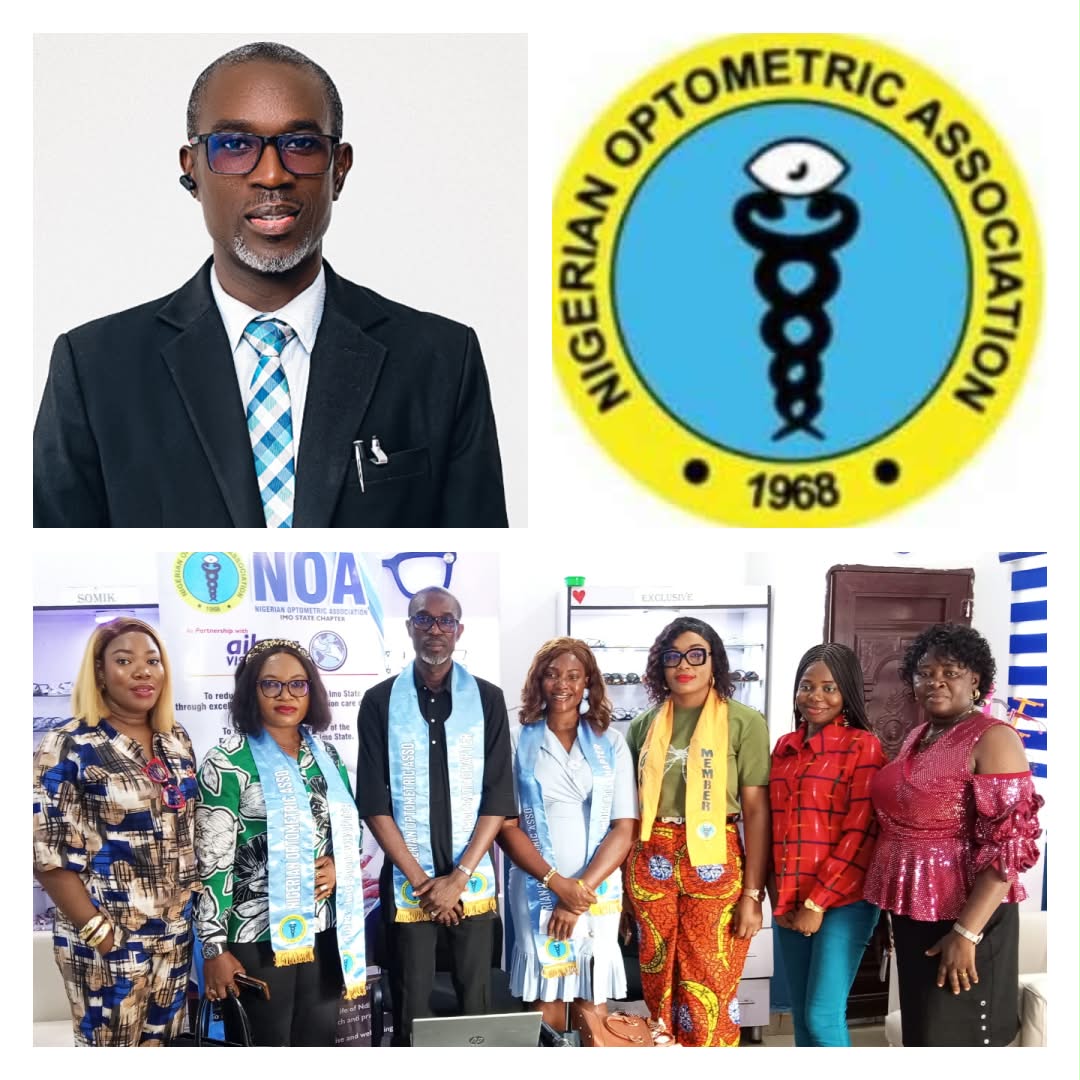
By Ifeanyichukwu Ibe
The Nigerian Optometric Association (NOA), Imo State Chapter, has announced plans to screen between 10,000 and 15,000 children across Imo State as part of its 2026 Children’s Vision Campaign, even as it called on the state government to prioritise funding for the eye-care sector.
The Chairman of the Association, Dr. Patrick Iwuchukwu, disclosed this on Wednesday, October 7, 2026, during a media conference organised to commemorate World Sight Day at the NOA State Secretariat, Owerri.
The 2026 World Sight Day is being marked with the theme “Love Your Eyes”, with the campaign catchphrase “See Well. Learn Well. Live Well,” and children’s vision as the focus in Imo State.
Iwuchukwu, who was flanked by members of the Association while reading his address, said the Anya Ndi Imo Di Mma – Children’s Vision 2026 Initiative would take eye-health services to schools and communities, particularly public schools, underserved areas and vulnerable children.
He said the programme would go beyond routine screening to include early detection, treatment support, provision of corrective spectacles where appropriate, referral for specialist care and follow-up of identified cases.
According to him, the initiative was an extension of the Association’s Anya Ndi Imo Di Mma public-health programme, which in 2025 focused on commercial and professional drivers and identified several eye conditions, including presbyopia, reduced visual acuity, pterygium, cataract, glaucoma and monocular vision.
Iwuchukwu said the experience reinforced the need for reliable local eye-health data, adding that the 2026 programme would also focus on documentation, analysis, referral, follow-up, advocacy and policy engagement.
He stressed that good vision was essential to children’s education and development, noting that undetected visual problems could affect a child’s ability to read, copy from the board, participate in classroom activities and interact with peers.
The NOA chairman therefore urged the Imo State Government to prioritise eye care by making clear and adequate budgetary provisions for the subsector, stressing that sustainable eye-health programmes require deliberate government support.
He also called for the establishment of integrated eye-care centres in the state to improve access to comprehensive services and discourage residents from seeking eye-care services outside Imo.
Iwuchukwu further decried the activities of quacks, warning that patronising unqualified practitioners could cause avoidable damage to sight. He urged residents to consult qualified eye-care professionals and called for collaboration among government, communities, organisations and religious bodies to tackle quackery.
He also urged teachers to pay attention to pupils who struggle to copy from the board, move closer to see classroom materials, avoid reading or show unexplained academic difficulties, noting that such behaviours could sometimes be linked to poor vision.
Iwuchukwu called for stronger collaboration among government, schools, healthcare institutions, professional bodies, development partners, corporate organisations, parents, communities and the media to improve children’s eye health.
Speaking on preventive measures, Dr. Chidimma Amuneke and Dr. Cynthia Anumodu urged parents, teachers and caregivers to pay closer attention to children’s eye health.
They cautioned against children playing with harmful objects, excessive exposure to electronic devices and self-medication, while advocating regular eye examinations and timely treatment of identified eye problems.
They also encouraged healthy nutrition through natural foods rich in essential vitamins and minerals, as well as appropriate outdoor activities, noting that good vision was essential for children to reach their full potential and avoid social stigma.
Among NOA members who attended the briefing were Dr. Munachi Abiaziem, Dr. Patience Uche-Biado, Dr. Blessing Abara-Akuchie, Dr. Ikenna Igwe and Dr. Joy Anuforo, among others.
