By Oluchi Uzo
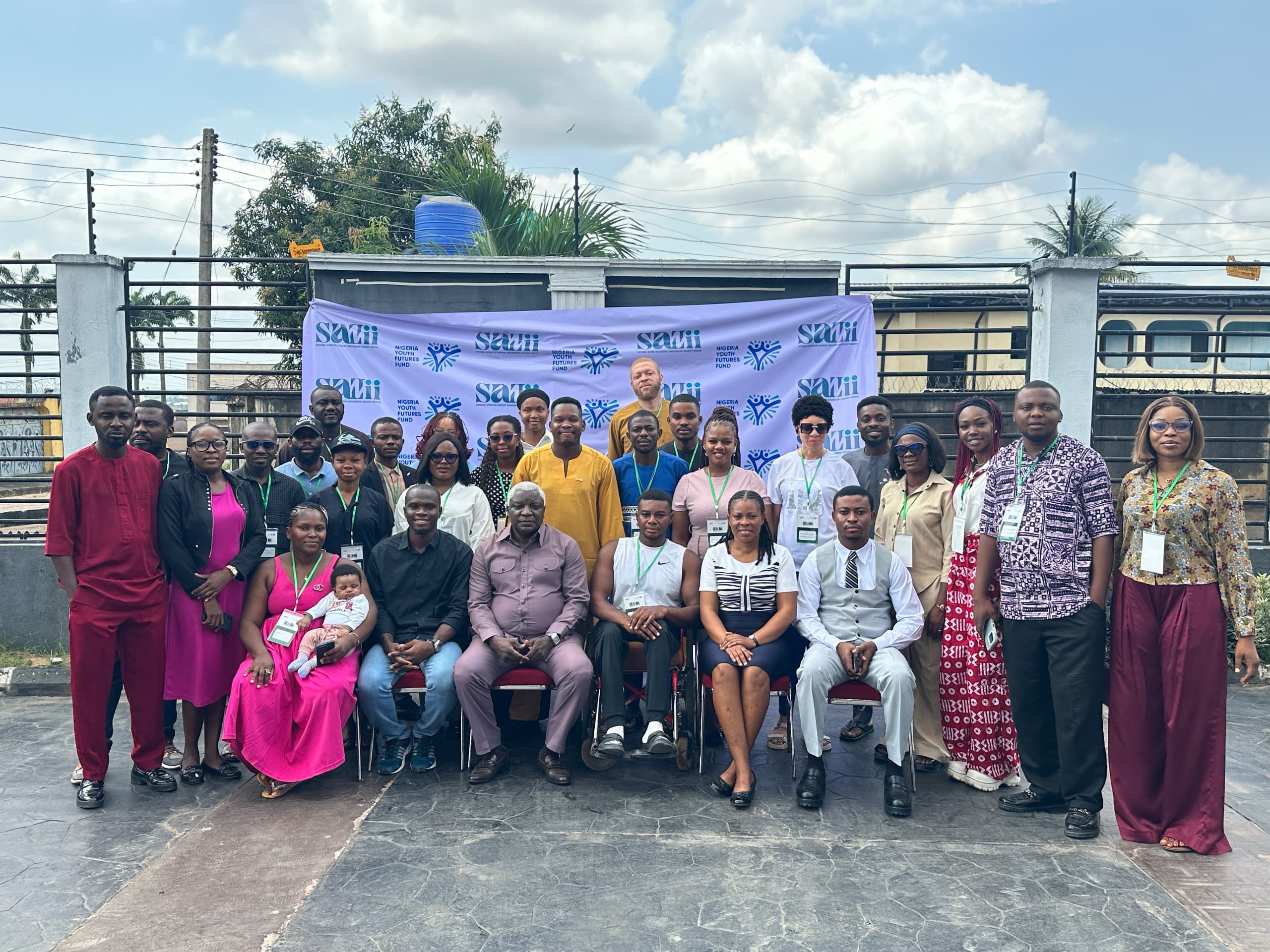
Youths drawn from the 27 local government areas of Imo State have been trained in peacebuilding, conflict management and violence prevention under the Udo Ka Nma Project.
The two-day training, which held in Owerri, was organised by the SALTI Initiative with support from the Nigeria Youth Futures Fund.
The programme aimed to equip young people, including persons with disabilities, with practical skills to identify early warning signs of conflict, improve communication and resolve disputes peacefully before they escalate into violence.

The training featured sessions on conflict analysis, gender equality in peacebuilding, misinformation in conflict reporting and building trust between communities and security institutions.
Speaking at the event, Team Lead of the SALTI Initiative and Project Manager of Udo Ka Nma, Chimezie Ebosie, said the project was inspired by a tragic incident in his community involving a young man accused of stealing a power bank.
According to him, the young man died after being beaten, while the incident triggered further violence, resulting in the burning of two houses and the destruction of a government-installed solar power facility.
Ebosie said the incident demonstrated how a seemingly minor disagreement, if poorly managed, could lead to loss of life, destruction of property and wider community unrest.

He explained that the six-month project was designed to develop young peace champions who would return to their respective local government areas to conduct step-down training for other young people, thereby extending the programme’s impact to more communities.
He urged participants to take the training seriously and become advocates of peaceful conflict resolution in their schools, workplaces and communities.
The project manager also called on community leaders to establish early warning systems for identifying and reporting emerging disputes before they degenerate into violence.
He condemned jungle justice, stressing that suspected offenders should be handed over to the police rather than subjected to mob action. He urged residents to respect human rights and channel complaints through lawful means.
One of the facilitators, Dr Austin Onuoha, Executive Director of the Africa Centre for Corporate Responsibility and a lecturer at the National Peace Academy, Abuja, spoke on Conflict Analysis: Understanding the Causes, Parties, Context and Dynamics of Conflict, among other topics.

Onuoha explained that effective conflict resolution required a proper understanding of the causes of a dispute, the parties involved, their interests and the circumstances surrounding the disagreement.
He noted that conflict was not necessarily negative, as disagreements could be resolved constructively or destructively depending on how the parties involved handled them.
He urged participants to adopt non-violent approaches to dispute resolution and ensure that efforts to resolve conflicts did not result in human rights violations.
Another facilitator, Peace Dike of the Virgin Hearts Foundation, spoke on Advancing Gender Equality in Peacebuilding and Conflict Management.
Her session highlighted the importance of gender equality and inclusive participation in peacebuilding, particularly in ensuring that different groups had a voice in resolving disputes and promoting peaceful coexistence.
Paschal Chukwuemeka facilitated a session on Fact-Checking Misinformation in Conflict Reporting, emphasising the need to verify information before sharing or publishing it, especially in situations where unverified claims could heighten tension and trigger violence.

The training also featured group presentations through which participants demonstrated their understanding of the topics discussed and their application to conflict prevention and peacebuilding.
Speaking on the impact of the programme, one of the participants, Nlemadim Jude, from Owerri North Local Government Area, said the training had broadened his understanding of information sharing and the need to verify information before passing it across.
Jude, who said he previously shared information and comments on WhatsApp without necessarily verifying their authenticity, noted that the training had made him more conscious of the dangers of spreading unverified reports.
He explained that he had learnt to verify information before sharing it, particularly because false reports could create legal problems, cause misunderstanding and fuel conflict.
He also said the sessions had taught him to understand people’s feelings and perspectives when resolving disagreements.

According to him, effective conflict resolution should not focus solely on determining who is right or wrong but on finding solutions that address the concerns of the parties involved.
Another participant, Igwilo Hossana from Orsu Local Government Area, said she joined the programme to acquire more knowledge and improve her understanding of peacebuilding.
Hossana described the training as an opportunity to correct misconceptions, strengthen her knowledge and gain confidence in what she had previously understood.
She said the programme exposed her to the complexities of peacebuilding, noting that achieving peace required more than simply asking people to live together harmoniously.
According to her, understanding justice and the different factors surrounding conflicts was essential to promoting lasting peace.
The two-day programme ended with the presentation of certificates to participants.
